 Vanda Svobodova
In a world dominated by cutting-edge technology, Google’s formidable artificial intelligence, Gemini, faced an unexpected hurdle. Designed to perform a multitude of tasks with superior precision, Gemini has been at the forefront of AI advancements. However, its recent encounter with an unlikely contender—a vintage Atari chess program—revealed surprising inadequacies, leading to the match being preemptively called off.
Surprise in the AI World
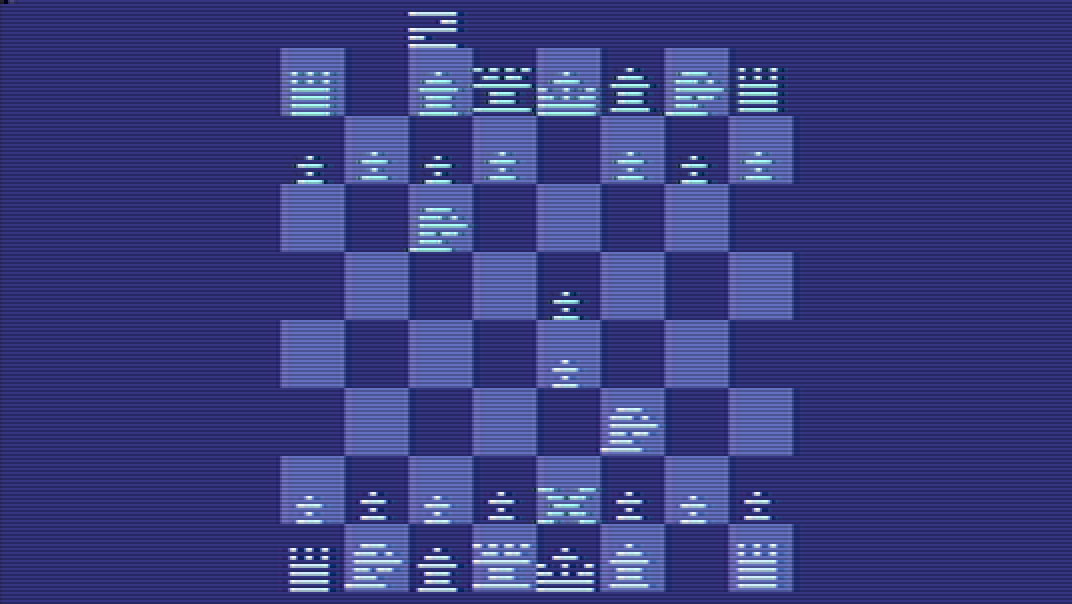
The Google Gemini AI, revered for its advanced computational abilities, was poised to take on the humble Atari chess, a relic from a bygone era. This AI system has been trained in vast and diverse domains, making it a prime candidate for engaging with legacy technologies. Yet, Google’s own admission of its AI struggling to contend with the 1.19 MHz machine paint a stark picture of the bounds that machine learning systems still face.
The decision to call off the match stemmed from a pragmatic assessment by the developers. Google acknowledged the unexpected difficulty in adapting modern AI capabilities to a challenge fundamentally rooted in the primitive yet intricate architecture of older technology systems.
An Intriguing Challenge
For enthusiasts, the idea of pitting today’s sophisticated AI systems against classic devices was novel. Atari chess, with its simplistic yet robust code, presents a unique challenge. Originally designed to operate efficiently on minimal hardware specifications, it pushed the boundaries of game programming at its time.
This match was meant to be a symbolic representation of how far technology has come. However, the task of translating the problem-solving approach from a modern neural network-based model to effectively understand and predict the strategies used by a primitive yet cunning chess algorithm proved to be more challenging than expected.
Deciphering the Differences
- The Atari chess program operated on a deterministic algorithm, relying heavily on fixed computational processes.
- Gemini, like most modern AI, uses probabilistic models to understand and adapt to data.
- This fundamental difference posed a significant obstacle in configuring Gemini to react to the static yet calculated moves of Atari chess efficiently.
The Implications for AI Development
This event underscores a broader narrative in artificial intelligence: the gap between vintage technology and modern innovation. While state-of-the-art AI can complete vast arrays of complex tasks, the foundational simplicity and unique constraints of older systems present unforeseen challenges.
From an innovation perspective, the concerns raised by this challenge encourage a re-evaluation of how AI systems are developed to understand and interact with different technological paradigms. Perhaps, integrating a historical technology comprehension module could be the key to bridging these functional gaps.
Moreover, the incident prompts introspection into how technology developers approach the evolution of AI. Should developers be looking to improve AI capabilities in tackling legacy systems, or should the focus remain steadfast on cutting-edge innovation? As the AI field continues to grow, balancing these considerations might drive new research directions and priorities.
Looking Forward
Despite the apparent shortcomings in this specific matchup, Google’s commitment to advancing its AI capabilities remains unwavering. This experience serves as a reminder of the iterations needed to refine artificial intelligence and make such systems more versatile across an ever-expanding range of applications.
With challenges such as this at the forefront, technological companies are likely to further develop AI systems capable of traversing the divide between the past and the present. It is this push—the challenge itself—that often catalyzes the next wave of technological breakthroughs, enriching our understanding of the potential and limitations inherent in AI technology.
As AI continues to evolve, the intricate dance between what has been and what is yet to come remains a testament to both human ingenuity and technological aspiration. For now, the face-off between Google’s Gemini AI and Atari chess serves as a poignant reminder of the complexities underlying the seemingly straightforward universe of artificial intelligence.
, image: https://www.tomshardware.com/tech-industry/artificial-intelligence/google-gemini-crumbles-in-the-face-of-atari-chess-challenge-admits-it-would-struggle-immensely-against-1-19-mhz-machine-says-canceling-the-match-most-sensible-course-of-action