 Kristina Vankova
The Czechs are a West Slavic nation of 10.7 million people, mostly Catholic-by-baptism but among the most secular societies on earth, deeply attached to their language, their beer, and their sense of ironic humor. This is a foreigner’s guide to understanding Czech culture — the traits, values, and history that shape how Czechs interact with each other and the world.
Czech identity at a glance
- Population: 10.7 million (2026).
- Origin: West Slavic people; settled Bohemia in the 6th century.
- Religion: Officially Catholic; practically one of the world’s most secular societies (~30% identify as any religion).
- Values: Practical, understated, ironic, family-centered, deeply attached to nature and cottages.
- Famous for: Beer, cottages, ironic humor, understatement, cultural pessimism.
Key traits of Czech culture
Understatement and reserve
Czechs are not a smiling-at-strangers culture. Public reserve is normal; friendliness is reserved for actual friends and warms up quickly once you’re inside the circle. Loud American-style enthusiasm can strike Czechs as insincere.
Irony and dark humor
Czech humor is famously ironic, often self-deprecating, and darker than Western European averages. The great Czech literary tradition — Švejk, Kafka, Hašek, Kundera — is built on absurdist irony. A Czech saying “That’s great” often means “That’s terrible.”
Practical skepticism
Two centuries under Austrian rule and four decades under Communism have left Czechs with a well-honed skepticism of authority, ideology, and grand promises. Czechs distrust utopianism from all directions.
Beer culture
Beer is central. Czechs drink 142 liters/person/year — the highest in the world. Beer is treated as food, not luxury. See our Prague Beer Guide.
Cottage weekends (chata / chalupa)
~10% of Czechs own or have access to a countryside cottage (chata or chalupa). Weekend cottage life — gardening, mushroom hunting, wood fires — is fundamental to Czech identity, cutting across social class.
Mushroom hunting
An almost religious autumn tradition. Nearly every Czech has a family recipe for mushroom soup + a preferred forest location kept secret.
Deep environmental values
Nature is respected. Recycling rates are high. Sunday quiet + noise ordinances are taken seriously. Cottage weekends reinforce this.
Language and identity
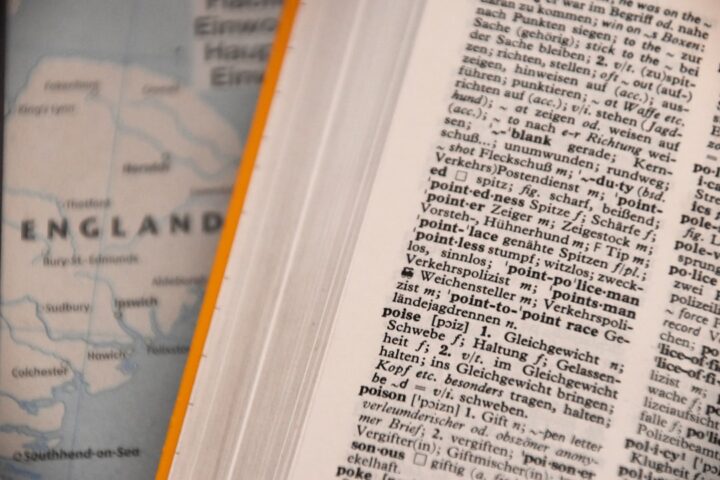
Czech language is central to identity. It survived 300 years of Habsburg German-language rule; the 19th-century “Czech National Revival” rebuilt it as a modern literary language. Learning even basic Czech phrases earns immediate warmth — see our Czech phrases for travelers.
Religion — a paradox
Czech Republic ranks among the world’s most secular societies. Roughly 30% claim any religion; only ~10% attend church. But Catholic cultural forms — Christmas Eve dinner, All Saints Day visits to cemeteries, saints on street corners — remain deeply embedded even for atheist Czechs. Czech secularism is culturally warm, not culturally cold.
Cultural touchstones
Literature
- Franz Kafka — The Trial, The Metamorphosis. See our Kafka walking tour.
- Jaroslav Hašek — The Good Soldier Švejk (the greatest Czech novel).
- Karel Čapek — Coined “robot”; father of Czech science fiction.
- Bohumil Hrabal — Closely Watched Trains, I Served the King of England.
- Milan Kundera — The Unbearable Lightness of Being.
- Václav Havel — playwright + statesman.
Music
- Bedřich Smetana (Má vlast) — nationalist romantic composer.
- Antonín Dvořák — best-known Czech composer internationally.
- Leoš Janáček — early 20th century modernist.
- Marta Kubišová — protest singer of the Prague Spring.
Film
- Miloš Forman — Amadeus, One Flew Over the Cuckoo’s Nest.
- Věra Chytilová — Daisies (1966).
- Jiří Menzel — Closely Watched Trains (1966).
Czech and Slovak — related but distinct
Czech and Slovak are closely related; mutually intelligible; shared political history in Czechoslovakia (1918-1992). Peaceful split on 1 January 1993 (“Velvet Divorce”) — one of the few peaceful state-splits in history.
Historical shape of Czech identity
Hussite movement (15th c.)
Jan Hus’s execution in 1415 sparked the Hussite Wars — first anti-Catholic religious rebellion in European history, a century before Luther. Codified an early Czech tradition of principled dissent.
National Revival (19th c.)
Rebuilding of Czech language, culture, and national consciousness after centuries of German-language Habsburg administration. Palacký, Jungmann, Smetana as key figures.
Masaryk’s Czechoslovakia (1918-1938)
Tomáš Garrigue Masaryk founded Czechoslovakia in 1918. Interwar Czechoslovakia was one of only two Central European countries to maintain functional democracy (with Finland). Cultural high-water mark.
Communism (1948-1989)
Four decades of Soviet-aligned rule. See our Prague Spring 1968. Ended with the Velvet Revolution of November 1989 — see our November 17 guide.
Post-1989 Czech Republic
EU (2004), Schengen (2007), NATO (1999). Havel’s presidency defined the moral tone; contemporary politics is more polarized.
What Czechs value
- Family: Sunday lunch with parents/grandparents is a real tradition.
- Nature: Cottage weekends, hiking, mushroom hunting.
- Beer: Not a joke — genuine cultural centerpiece.
- Education: Historic pride in the education system dating to Charles University (1348).
- Craftsmanship: Bohemian crystal, Škoda engineering, garnet jewelry.
- Ironic humor: The intellectual currency of Czech culture.
What visitors should know
- Learn a few Czech phrases — see our phrases guide.
- Don’t be put off by initial reserve — Czechs warm up quickly with proper social lubrication (beer).
- Don’t compare Czechs to Russians (very sensitive after 1968); don’t confuse Czech and Slovak.
- Tip 10%; see our tipping guide.
- Respect Sunday quiet + noise ordinances.
Recommended reading
- “Havel: A Life” by Michael Žantovský — best English biography of Havel.
- “The Unbearable Lightness of Being” by Milan Kundera — the essential Czech novel in English.
- “The Good Soldier Švejk” by Jaroslav Hašek — the archetypal Czech literary work.
- “Prague Winter” by Madeleine Albright — Czech childhood memoir.
- Rick Steves Prague & the Czech Republic — cultural context in guidebook form.
FAQ
Are Czech and Czechoslovakian the same?
Czechoslovakia was a shared state (1918-1992). Since 1993 there are two separate countries — Czech Republic (Czechs) and Slovakia (Slovaks).
Are Czechs Slavic?
Yes — West Slavic people, closely related to Slovaks and Poles.
Are Czechs religious?
Among the world’s most secular societies formally, but Catholic cultural forms remain embedded.
Are Czechs and Russians the same?
No — both are Slavic peoples but distinct languages, cultures, and (increasingly) political orientations.
Why do Czechs drink so much beer?
Historically inexpensive, high-quality, and central to social life. Beer is treated as food, not just alcohol.