 Vanda Svobodova
Czech street food centres on hot, hearty, meat-and-carb classics: sausages (klobása), open-faced sandwiches (chlebíčky), fried cheese (smažený sýr) baguettes, ham hocks (koleno) at Christmas markets, and — controversially — trdelník, the sugar-and-cinnamon “chimney cake” tourists love and locals dismiss as not actually Czech. Prague has a lively street-food scene; here’s what to seek out and what to skip.

The essential Czech street foods (locals’ picks)
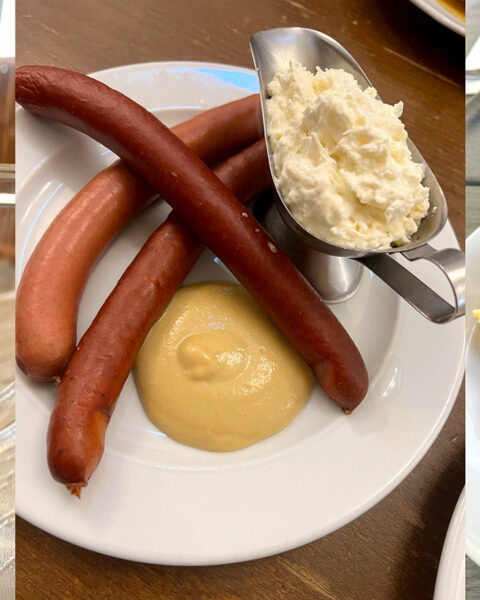
1. Klobása (grilled sausage)
Fat, garlicky pork sausages grilled over charcoal and served in a paper napkin with mustard, horseradish, and a slice of dark bread. Best from street stands at outdoor markets. Expect to pay 100–150 CZK (~€4–6). The gold standard is Prague’s traditional Havelské tržiště market, but every Christmas and Easter market has good ones.

2. Chlebíčky (Czech open-faced sandwiches)
Delicate rectangular slices of white bread topped with potato-and-egg salad, mayonnaise, ham, salami, cheese, cornichons, and small decorative elements (pickled onions, dill, olives). Buy from a traditional lahůdky (delicatessen) — the classic Prague spot is Sisters Bistro (Dlouhá 39). About 45–75 CZK each.
3. Smažený sýr v housce (fried cheese in a bun)
A slice of Edam or Hermelín cheese, breaded and deep-fried, served hot inside a bun with tartar sauce. The great Czech drunken-food. Widely available from evening food carts. 80–120 CZK.
4. Koleno (roasted pork knuckle)
A whole pork shank rubbed with garlic, caraway, and beer, then roasted slowly until the skin crackles. Sold by the slice from carts at Christmas markets and beer festivals; go for the crispiest-skinned one. 150–250 CZK per portion.
5. Bramboráky (potato pancakes)
Grated raw potatoes mixed with garlic, marjoram, egg, and flour, then pan-fried in lard until crispy. Sold plain or with smoked ham inside. 70–100 CZK.
6. Guláš in a bread bowl
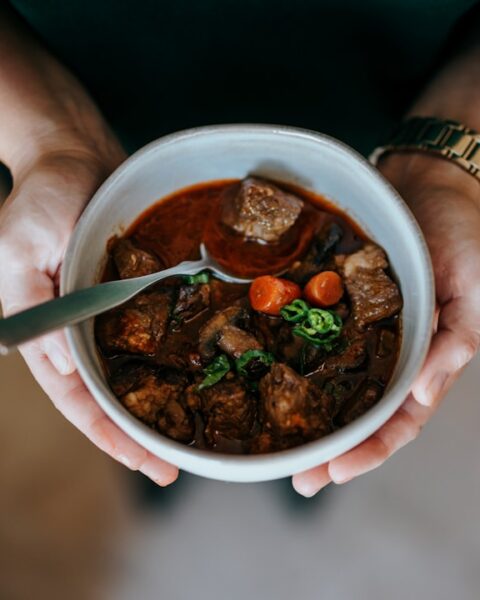
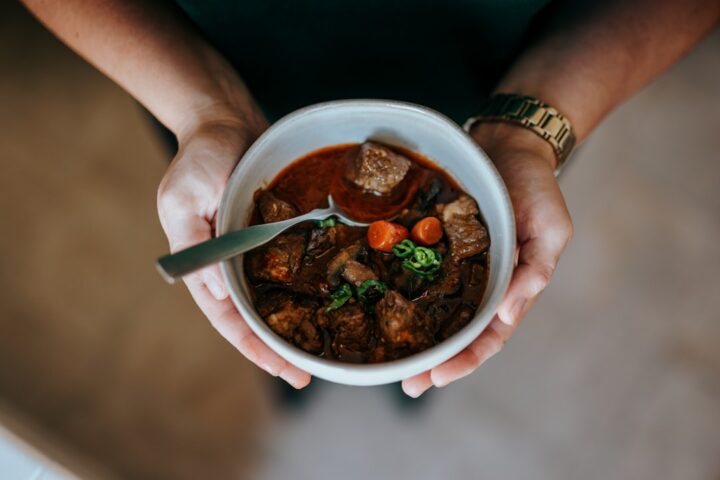
A hollowed-out loaf of dark bread filled with rich Czech beef goulash. Emerged as a Christmas-market speciality and now common year-round. 180–250 CZK.
7. Palačinky (Czech crêpes)
Thin pancakes stuffed sweet (jam, quark, chocolate, banana-and-nuts) or savoury (ham-and-cheese, spinach-and-mushroom). Sold from sweet stands, often folded into a triangle. 90–130 CZK.
The trdelník question
Trdelník is often described as “traditional Czech” — it isn’t. The sugar-dusted, chimney-shaped rolled pastry originates in Slovakia (in the town of Skalica) and only appeared in Prague around 2005 as a tourist novelty. It is now sold at every corner of the tourist zone at inflated prices (100–200 CZK). Fillings — Nutella, ice-cream, whipped cream — are pure tourist invention. Enjoy it as street food, but don’t tell Czechs it’s their national pastry.
Where to find the best Prague street food
- Havelské tržiště — the oldest market in Prague, best for classic klobása, produce, and cheap eats.
- Náplavka farmers’ markets — Saturday mornings on the Vltava embankment; craft food from small producers.
- Manifesto Market Andĕl — a modern shipping-container food-court with 20+ vendors including modern takes on Czech classics.
- Kulaťák (Vítězné náměstí, Dejvice) — Saturday farmers’ market beloved by locals, minimal tourists.
- Christmas markets (late Nov–early Jan) — every Prague square becomes a street-food stage.
Frequently asked questions
Is Prague street food safe?
Yes — hygiene standards at markets and permanent stands are strict. Use the same common sense as anywhere: prefer stalls with high turnover and hot-cooked-to-order food.
Is trdelník really not Czech?
Correct — it’s Slovak in origin (from Skalica) and only became “Czech” as a Prague tourist product in the last 20 years. Nothing wrong with enjoying it — just don’t call it traditional.
Are vegetarian street-food options available?
Yes but limited. Smažený sýr, bramboráky (sometimes cooked in animal fat — ask), palačinky, and langoš (fried dough with garlic and cheese) are common vegetarian options. Vegan is much harder on the street — head indoors for that.
What’s a fair price?
A klobása should be 100–150 CZK. If a stall charges 300 CZK on Old Town Square, you’re paying tourist tax — walk 200 metres in any direction.
Do I tip street-food vendors?
No — street food is priced final. Tipping is for sit-down restaurants (typically 10%).
Cookbook + at-home tools
- “Recipes from an Old Town Bohemian Kitchen” — includes bramboráky and guláš.
- “Czech Cookbook” by Doreen Grove
- Lodge 6-quart cast iron Dutch oven — for guláš and koleno.
- Rick Steves Prague guidebook