 Kristina Vankova
In a significant geopolitical development, Jordan has expressed strong disapproval of Israel’s recent decision to authorize a law that is perceived as challenging the mandate of the United Nations Relief and Works Agency for Palestine Refugees in the Near East (UNRWA). The new legislative measure has ignited tensions between the two nations, with Jordan openly condemning the move as detrimental to regional stability and the rights of Palestinian refugees.
Backdrop of the Controversial Law
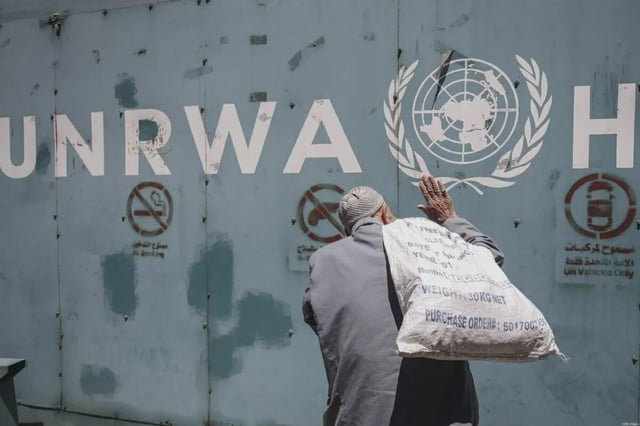
The crux of the controversy centers around Israel’s parliamentary approval of a law that directly targets the operations of UNRWA. This UN agency, established in 1949, plays a crucial role in supporting Palestinian refugees through a range of services including education, health care, and emergency relief.
Israel’s decision to implement this law is seen as a step toward diminishing the influence and functionality of UNRWA within its borders. Israeli officials have long maintained that UNRWA perpetuates the Palestinian refugee crisis, a viewpoint that sharply contrasts with the perspective of numerous international stakeholders including Jordan, which hosts a significant number of Palestinian refugees.
The Reaction from Jordan
In swift response, Jordanian officials have voiced serious objections, framing the new Israeli law as an attack not just on the agency but on the rights of Palestinian refugees. The Jordanian government issued a statement underscoring the importance of UNRWA’s role in providing essential services and maintaining regional stability.
The statement highlighted Jordan’s commitment to advocating for Palestinian rights and seeking a comprehensive and just solution to the refugee issue. Jordan’s position also reflects broader regional concerns about the potential implications of the Israeli law, particularly in light of the ongoing Israeli-Palestinian conflict.
The Role of UNRWA in the Region
Established in the aftermath of the 1948 Arab-Israeli war, UNRWA serves an estimated five million Palestinian refugees across Jordan, Lebanon, Syria, the West Bank, and Gaza. The agency is an integral player in the humanitarian landscape of the Middle East, offering indispensable support and services to communities often living in precarious situations.
UNRWA’s importance to host countries cannot be overstated, with entities like Jordan viewing the agency as a stabilizing force. For Jordan, which is home to over two million registered Palestinian refugees, any disruption to UNRWA’s operations could have significant socio-economic ramifications.
Potential Implications for Israel-Jordan Relations
Israel and Jordan, who share a lengthy and delicate history, have managed a peace treaty since 1994; however, relations have often been strained by issues particularly related to Palestinian matters. The new UNRWA law presents a fresh challenge, adding to the existing diplomatic complexities between the two nations.
Jordan has been a vocal supporter of a two-state solution and holds a vested interest in the resolution of Palestinian refugee issues, making Israel’s legislative move a direct point of contention. This development could potentially impact not only bilateral relations but also Israel’s broader diplomatic engagements in the Middle East.
International observers are closely watching how this situation evolves, noting the critical role that both Jordan and Israel play in the peace and stability of the region.
The discourse over the UNRWA law is a reflection of the broader geopolitical dynamics in the Middle East, highlighting the precarious balance of power and the enduring complexities of the Israeli-Palestinian conflict.
As the situation continues to unfold, the international community remains engaged, urging both nations to consider the long-term implications of their actions and to work collaboratively towards a peaceful resolution that respects the rights and needs of Palestinian refugees.