 Vanda Svobodova
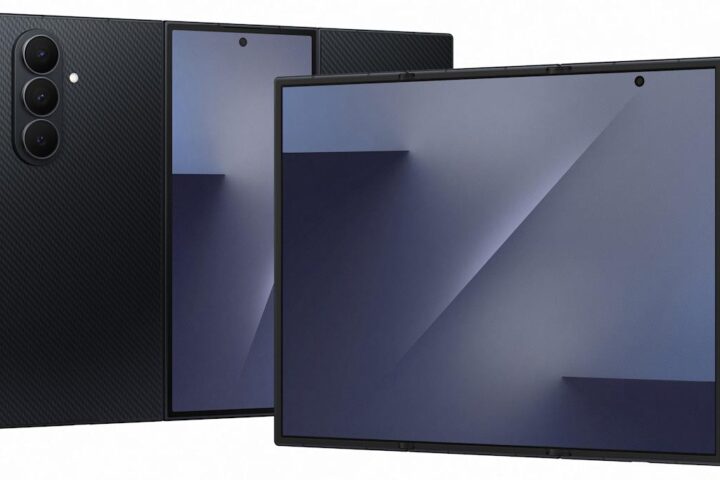
The recent launch of the Samsung Galaxy S26 Ultra has brought the tech world to attention with its impressive array of features and promising specifications. However, alongside the excitement, a concerning performance issue has surfaced, prompting questions about whether Samsung’s flagship can meet its ambitious promises. With a dual-chipset approach using Qualcomm’s Snapdragon 8 Gen 3 and Samsung’s own Exynos 2300 in different markets, the discrepancies in performance have become a focal point for tech analysts.
The Dual-Chipset Dilemma
Selling the Galaxy S26 Ultra with different chipsets is not new for Samsung, a strategy they’ve employed over several generations. The choice between Qualcomm’s Snapdragon and Samsung’s Exynos varies depending on the market, aiming to optimize manufacturing and reduce costs. However, this approach has led to significant performance discrepancies between models, a problem that persists with the S26 Ultra.
According to early benchmark tests, the Snapdragon variant outperforms its Exynos counterpart, echoing a familiar refrain from previous generations. The disparity is particularly evident in graphics performance and energy efficiency, where the Snapdragon 8 Gen 3 shows considerable superiority. This performance gap can impact user experience, especially in graphics-intensive applications and gaming.
Benchmark Revelations
Initial benchmark tests have laid bare the performance differences. The Snapdragon 8 Gen 3 not only delivers faster graphics processing but also provides better thermal management, which is critical during prolonged usage. Meanwhile, the Exynos 2300 struggles to maintain the same efficiency levels, potentially leading to overheating and throttled performance under heavy load.
For Samsung, these results pose a significant challenge in maintaining consistency and customer satisfaction across various global markets. Consumers in regions with the Exynos variant may feel shortchanged, knowing that an alternative version performs better under the hood. This inconsistency can further complicate marketing and consumer expectations, especially when positioned as the ultra-high-end device in Samsung’s lineup.
Impact on User Experience
Beyond the stark numbers of benchmarking data, the implications for day-to-day use are noteworthy. Users may experience slower app loading times and reduced performance in augmented reality applications—an area where processing power is heavily taxed. This can be particularly frustrating in a device marketed for its top-tier capabilities and designed for power users.
The differences in performance can also affect battery life. With the Snapdragon’s superior efficiency, users might enjoy longer periods between charges compared to their Exynos counterparts. This variance could lead to dissatisfaction among users who rely on their devices for extended productivity or entertainment without frequent charging interruptions.
Memory and Storage Impact
The memory specifications of the Galaxy S26 Ultra remain consistent across models, offering ample RAM and storage options. Yet, the handling of memory-intensive tasks again highlights the Snapdragon’s edge, digesting workloads more swiftly and effectively within its architecture.
- Faster multitasking with Snapdragon
- Potential lag in switching tasks with Exynos
- Power consumption efficiency affecting battery life
Despite these challenges, Samsung remains committed to providing regular software updates. These updates aim to optimize both hardware configurations to smoothen the differences. History suggests that while software tweaks can offer marginal improvements, bridging such a fundamental gap in chipset performance may prove to be ambitious.
The Galaxy S26 Ultra’s performance revelation serves as a reminder of the complexities involved in global smartphone production and delivery. Users find themselves at the crossroads of brand loyalty and performance satisfaction, pondering whether the technological compromise in different regions aligns with Samsung’s premium market positioning.
, image: https://www.forbes.com/sites/ewanspence/2026/01/13/samsung-galaxy-s26-ultra-snapdragon-exynos-benchmark-memory-specs/