 Vanda Svobodova
A decade ago, SpaceX redefined the trajectory of space exploration with a groundbreaking achievement that transformed the industry’s outlook towards reusable space rockets. This turning point followed a series of significant setbacks and tragedies, showcasing the resilience and innovative spirit that have come to define the company under Elon Musk’s leadership. The historic rocket landing on December 21, 2015, marked a crucial milestone, heralding a new era in which the economic and environmental viability of space travel became a tangible reality.
The Road to Innovation and Validation
Before the successful landing of the Falcon 9 rocket, SpaceX had endured a series of failures that tested the company’s mettle and perseverance. In 2015, SpaceX encountered a pivotal challenge when a Falcon 9 rocket exploded shortly after launch, destroying its cargo—a blow for both the company and the ambitious entrepreneurs betting on SpaceX’s capabilities. However, these setbacks only intensified Musk’s determination to prove that rockets could be reusable and reliable.
SpaceX had been developing the concept of reusable rockets for years prior to the triumphant 2015 landing. The idea was simple yet ambitious: create a rocket that could launch into space and return to its launch pad intact, ready to fly again. This concept promised to dramatically reduce the costs associated with space travel, making ambitious missions more feasible and frequent.
A Night to Remember: The 2015 Falcon 9 Landing
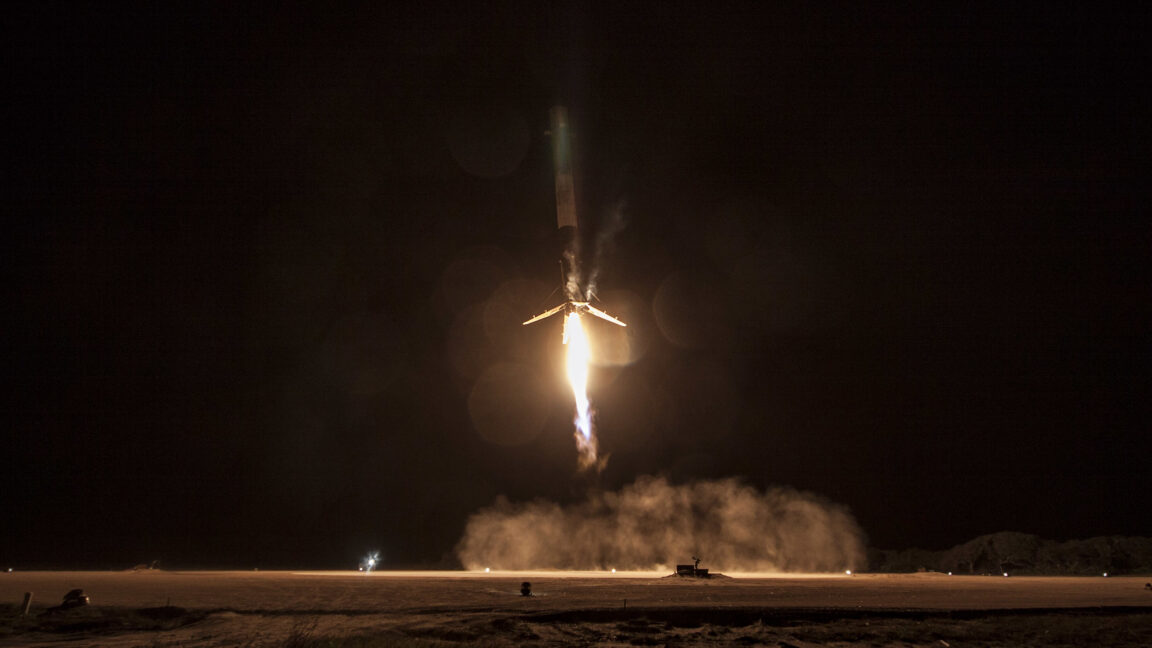
December 21, 2015, became a defining moment for SpaceX as the Falcon 9 rocket successfully landed upright at Cape Canaveral, Florida, after a brief mission into orbit. The successful landing was not merely a technical victory but a monumental shift in space technology’s capabilities. It demonstrated that rockets could indeed be reused, fundamentally altering the perception of space travel as a financially sustainable venture.
Underpinning this achievement was a combination of innovative engineering and relentless persistence. The company had fine-tuned its navigation and control systems to allow for precise maneuvers necessary for the rocket’s return to Earth. The excitement and tension surrounding the landing were palpable, with observers closely watching what seemed like a make-or-break attempt for SpaceX.
Engineering Excellence and Precision
SpaceX’s engineering team had to overcome numerous technical challenges to achieve this breakthrough. The process involved intricate calculations and state-of-the-art technology to manage the rocket’s trajectory. The emphasis was on ensuring the Falcon 9’s stability while descending through the Earth’s atmosphere at high speeds, a task that required meticulous control of the rocket’s engines and aerodynamic surfaces.
- Advanced grid fins for aerodynamic control
- Precision maneuvers using GPS and computerized systems
- Innovative engine technology to facilitate controlled descent
Implications for the Space Industry
The successful landing of Falcon 9 was more than just a win for SpaceX. It was a watershed moment for the space industry at large. By demonstrating the feasibility of rocket reusability, SpaceX opened doors to more frequent and ambitious missions. This development promised a reduction in launch costs, making space more accessible not just to governments and large corporations but potentially to new startups and educational institutions as well.
Following the Falcon 9 landing, competition in the space industry intensified. Aerospace companies worldwide were compelled to rethink their strategies and innovate. The paradigm of disposable rockets was gradually replaced by a focus on sustainability and cost-efficiency, aligning with global sustainability goals.
Future Prospects and Challenges
Although the Falcon 9 landing marked a landmark achievement, SpaceX’s journey was far from over. The company’s ambitious goals included plans for crewed missions to Mars and the development of the Starship, a next-generation spacecraft intended to facilitate these objectives. These initiatives required continued innovation and problem-solving in areas ranging from propulsion to life-support systems.
The challenges ahead for SpaceX are substantial. The company must continually evolve its technologies to meet the demands of deep-space exploration while ensuring safety and reliability. Nonetheless, the milestone achieved in 2015 remains a testament to SpaceX’s potential to revolutionize space travel and exploration.
SpaceX’s ability to turn previous failures into a stepping stone for success has set a new standard for what can be achieved through relentless innovation. As the industry continues to evolve, the impact of SpaceX’s achievements a decade ago cannot be overstated, providing inspiration and a blueprint for the future of exploring beyond our planet.
, image: https://arstechnica.com/space/2025/12/ten-years-ago-spacex-turned-tragedy-into-triumph-with-a-historic-rocket-landing/