 Jan Nettig
The Czech Republic’s nearly two-year-long negotiations with Volkswagen over the potential establishment of a 120 billion CZK battery factory for electric vehicles have laid bare a concerning unpreparedness in attracting investors to key projects. This comes at a critical juncture when global automotive industry leaders, contributing to a tenth of the Czech GDP, are making pivotal investment decisions for the coming decades.
Despite not receiving a definitive ‘no’ from Volkswagen for a gigafactory in the Czech Republic, and the government not losing out to Poland or Hungary for this particular project, the team led by Petr Fiala (ODS) has its work cut out. Big names in Europe are scouting for locations to invest tens of billions of euros in factories for the 21st century, but the Czech Republic is not on their radar.

For instance, China’s CATL, a global leader in battery production, is constructing one of Europe’s largest battery factories in Debrecen, Hungary, with an investment of 7.3 billion euros. The facility is expected to supply batteries with a total capacity of up to 100 gigawatt-hours annually, catering to clients like Mercedes-Benz and the Slovak factories of Stellantis and Volkswagen. Hungary has emerged as one of the most successful European countries in attracting this type of production, with South Korean giants Samsung and SK Innovation also operating there, reaching capacities of up to 40 and 47 GWh, respectively. Poland is not far behind, with LG Chem targeting a capacity of up to 65 GWh of batteries, which have been in production since 2017 in Wroclaw, and expansions from Panasonic and Swedish Northvolt are also underway.
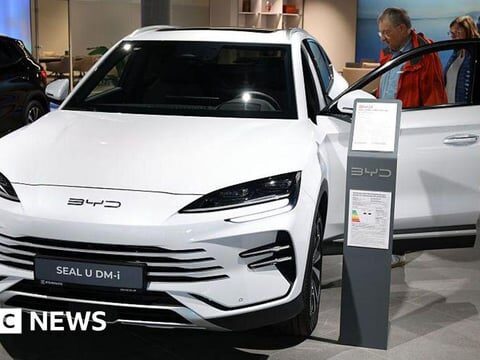
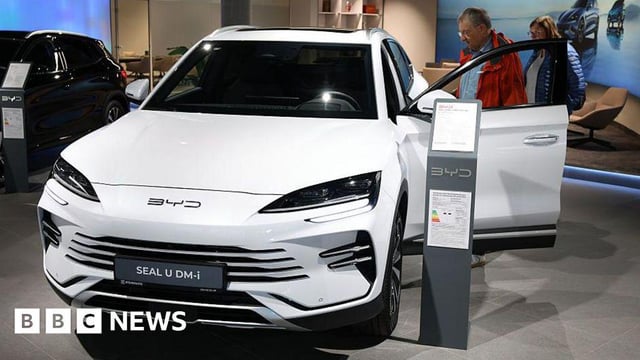
Automakers themselves are investing in battery production. Volkswagen is currently working on three gigafactories in Spain, Germany, and Canada, while Stellantis plans to establish four smaller factories in northern France. Tesla is already producing in Grünheide near Berlin, and BYD, China’s largest electric vehicle manufacturer, also has plans for a European gigafactory.
Czechia has potential investors, primarily Asian manufacturers or consortia, who may consider expanding into the country. According to industry expert Petr Knap from EY, the Czech Republic lacks many prerequisites for attracting such investments. Potential investors seek well-prepared locations, generous financial incentives, and cheap sources of energy, particularly ‘green’ electricity from renewable sources. However, the Czech Republic struggles to meet these requirements or provide them timely and in the required quantity.
The absence of ready industrial parks is a significant issue. If an investor does not see a suitable location, discussions about investment incentives do not even begin. The current top priority for the CzechInvest agency is the preparation of sites, particularly in coal regions where the largest domestic brownfields lie.
This article highlights the challenges and opportunities facing the Czech Republic in attracting large-scale investments in the burgeoning electric vehicle and battery production industry. It underscores the need for strategic planning, infrastructure readiness, and competitive incentives to draw in global players looking to establish their gigafactories.