Karolina Sedlackova
Prague, the capital city of the Czech Republic, is one of the most beautiful and historically rich cities in Europe. Nestled in the heart of Central Europe, this city is where ancient history meets vibrant modernity. From the iconic Prague Castle, a symbol of its regal past, to the bustling Old Town Square and Wenceslas Square, Prague has become one of the most visited European cities, a must-see destination for travelers worldwide.

Geographic Location of Prague
Prague is situated in the Czech Republic, a landlocked country bordered by Germany, Poland, Slovakia, and Austria. Its central location within Central Europe has historically made it a crossroads for many cultures and empires, particularly during the reign of the Holy Roman Empire.
The Czech Republic is part of the Czech Lands, along with Moravia and Czech Silesia, contributing to a rich cultural tapestry. Prague’s unique position at the heart of the Central Bohemian Region has been pivotal in shaping the country’s history and its role in Eastern Europe.

Coordinates and Time Zone
Prague is located at approximately 50.0755° N latitude and 14.4378° E longitude. It lies on the banks of the Vltava River, which flows through the city, dividing it into the Old Town and Lesser Quarter. The Charles Bridge, a historic structure, connects these two parts of the city and stands as a testament to Prague’s architectural legacy.
The city operates in the Central European Time (CET) zone, which is UTC +1. During daylight saving time, which runs from the last Sunday in March to the last Sunday in October, Prague shifts to Central European Summer Time (CEST), which is UTC +2. This time zone is shared by many European countries, including Germany, France, Italy, and Spain, facilitating synchronized activities and travel across the continent.

Prague’s Significance in the Czech Republic
As the largest city and the historical capital of the Czech Republic, Prague plays a crucial role politically, economically, and culturally. The Czech President resides in Prague Castle, which has stood as a symbol of power for centuries. The city is also home to important educational institutions like Charles University, founded in 1348, one of the oldest universities in the world, and several public and private schools.
Prague’s historical significance extends beyond its national importance. The city has played a crucial role in European history, particularly during the medieval period when it was the capital of the Holy Roman Empire under Emperor Charles IV. The legacy of this period is still evident in the city’s stunning architecture, including the iconic Charles Bridge, Prague Castle, and the Gothic-style St. Vitus Cathedral.

Prague’s Location within Europe
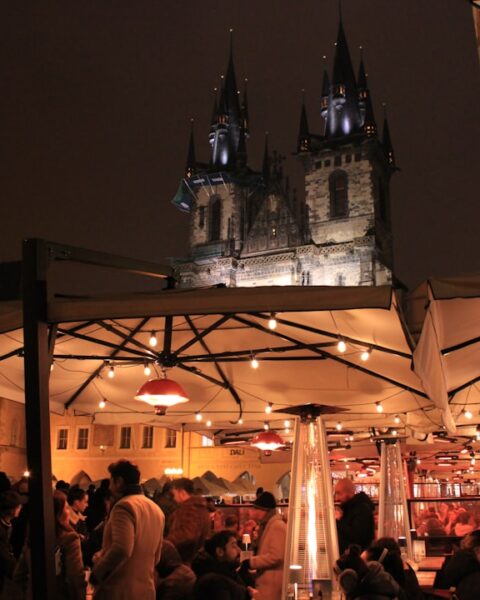
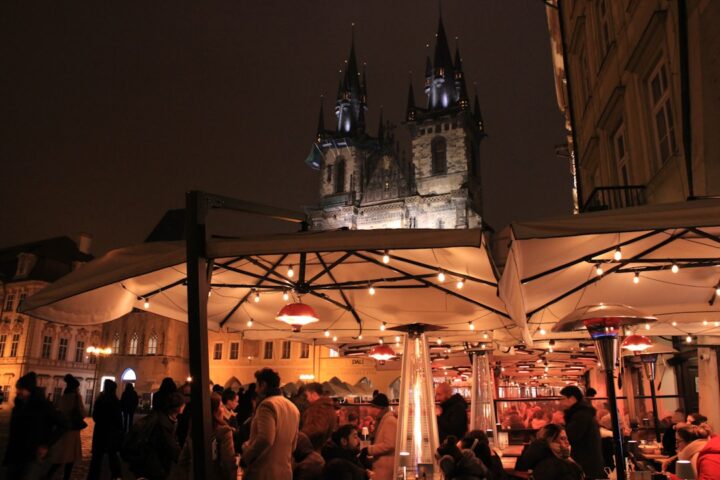
Prague’s central location in Europe makes it an ideal gateway for exploring the continent. The city is easily accessible from major cities like Berlin, Vienna, and Budapest. Its well-preserved historical landmarks, including Prague Castle, Old Town Square, and the Jewish Quarter, make it a popular tourist destination. The city is also known for its thriving beer culture, and visitors often enjoy relaxing in the historic Town Square after touring the National Museum or visiting the famous Lennon Wall.
The city’s central location also means that it experiences a temperate climate, with four distinct seasons. Summers are generally warm, with temperatures averaging around 20-25°C (68-77°F), while winters can be cold, with temperatures often dropping below freezing. This climate makes Prague a year-round destination, with each season offering its unique charm, from the vibrant Christmas markets in winter to the blooming gardens in spring.

Historical and Cultural Importance of Prague’s Location
Prague’s location has been a driving force in its cultural and historical significance. The city played major roles throughout history, particularly as the capital of the Holy Roman Empire under Charles IV. Many of the city’s architectural gems, such as Charles Bridge and the St. Vitus Cathedral, were constructed during this period.
During the 20th century, Prague endured occupation during World War II and later became part of the Eastern Bloc during the Cold War. However, Prague’s Velvet Revolution in 1989 peacefully ended Communist rule in Czechoslovakia, establishing the Czech Republic’s independence.
Prague is also home to various cultural centers, museums, and galleries. The city’s German population played a significant role in its development, particularly during the time of the Habsburg Monarchy. Landmarks like Prague Zoo, known globally for its conservation efforts, continue to attract visitors from around the world.

Prague as a Modern European Capital
Prague is a vibrant modern capital and a major player within the European Union. Its integration into the EU has bolstered its economic standing and improved infrastructure, making it a popular destination for both tourists and businesses alike.
The city’s cultural offerings are just as rich as its history. Visitors can enjoy the annual Prague Spring International Music Festival, explore its many major museums, or wander through its numerous theatres. The city is also home to the A Hundred Spires, a nickname earned from its skyline dotted with stunning historical buildings.
Prague’s cultural scene is complemented by its thriving culinary landscape. The city’s restaurants offer a wide range of cuisines, from traditional Czech dishes to international flavors. Prague is also famous for its beer culture, with a long history of brewing that dates back to the Middle Ages. The city’s beer halls and pubs are an integral part of its social fabric, offering locals and visitors alike a place to relax and enjoy a pint of world-renowned Czech beer.

Connectivity and Accessibility
Prague’s Václav Havel Airport serves as the main international gateway to the city, while its extensive public transportation network, including trams and buses, makes it easy to navigate. Visitors can also take day trips from Prague to other destinations within the Central Bohemian Region or explore other major cities like Bratislava or Dresden.
For history lovers, a walk through the narrow streets of the Old Town offers a glimpse into the city’s medieval past. The Jewish Quarter, once home to a thriving Jewish community, and the historical exhibits housed in the National Museum offer rich insights into Prague’s complex history.
For those traveling by road, Prague is connected to neighboring countries by an extensive network of highways. The city’s location at the crossroads of major European routes makes it an ideal starting point for road trips to nearby attractions, such as the picturesque towns of Český Krumlov and Karlovy Vary, or the scenic landscapes of the Bohemian and Moravian regions.

The Role of Prague in European Union
As the capital of the Czech Republic, Prague plays a significant role in the European Union (EU). The Czech Republic joined the EU in 2004, and since then, Prague has become an important center for European politics, business, and culture. The city hosts various EU-related events and conferences, attracting politicians, diplomats, and business leaders from across Europe.
Prague’s integration into the EU has brought numerous benefits to the city, including increased investment, economic growth, and improved infrastructure. The city’s strategic location within the EU has also made it an attractive destination for international companies and organizations looking to establish a presence in Central Europe.
In addition to its economic and political significance, Prague is also a cultural ambassador for the Czech Republic within the EU. The city’s rich cultural heritage and vibrant arts scene make it a key player in European cultural exchanges, promoting the Czech Republic’s unique traditions and contributions to European civilization.

Prague – The Heart of Europe
Prague’s location in the heart of Europe has shaped its history, culture, and identity in profound ways. From its early days as a medieval trading center to its role as the capital of a modern European nation, Prague has always been at the crossroads of civilizations, where East meets West, and tradition blends with innovation.
Today, Prague stands as a testament to the enduring legacy of Central European culture. Its well-preserved historical sites, vibrant cultural scene, and strategic location make it a city that continues to attract visitors, scholars, and artists from around the world. Whether you are exploring its ancient castles, strolling along the Vltava River, or enjoying a cup of coffee in one of its charming cafés, Prague offers an experience that is both timeless and dynamic.
In summary, Prague is more than just a city; it is a symbol of Europe’s rich and diverse heritage. Its location in Central Europe makes it a key destination for anyone looking to understand the continent’s history, culture, and future. Whether you are a traveler, a historian, or simply someone who appreciates the beauty of a well-preserved city, Prague is a place that should be at the top of your list.