 Kristina Vankova
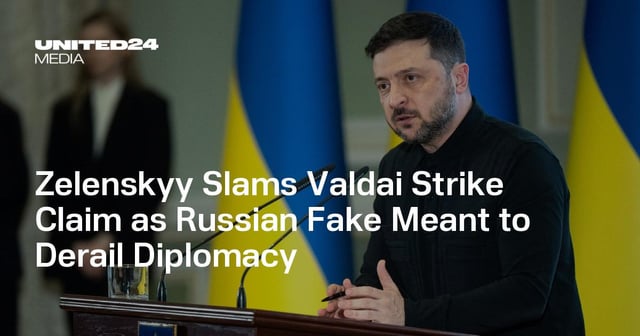
In a recent communication, Ukrainian President Volodymyr Zelenskyy strongly criticized claims made by Russia regarding a purported strike on the Valdai Discussion Club, labeling them as deliberate misinformation aimed at disrupting diplomatic efforts. The assertion, which has been circulated by Russian officials, alleges that Ukraine was responsible for an attack on the Valdai Club, an influential think tank in Russia. According to Zelenskyy, these claims are baseless, serving primarily as a tool to sow discord and uncertainty in international relations.
Background on the Valdai Claims
The controversy stems from recent statements made by Russian authorities, claiming that a missile strike, allegedly launched by Ukraine, targeted the Valdai Discussion Club. The Valdai Club, known for engaging with experts and policymakers in discussions concerning Russian policy and global affairs, has been thrust into the spotlight due to these accusations.
Russian officials have used this claim to bolster their narrative of Ukrainian aggression, a storyline they have continuously pushed in the wider conflict between the two nations. However, Ukraine and its supporters question the authenticity of these accusations, arguing that they are part of a strategic effort by Russia to manipulate the narrative and justify further aggressive actions.
Zelenskyy’s Response
President Zelenskyy did not mince words in his response to the accusations. In a public address, he stated that the claims were a clear example of Russian propaganda, designed to divert attention from their own actions and shift the burden of proof onto Ukraine. The timing of these accusations coincides with critical talks aimed at easing tensions and facilitating dialogue between Russia and Ukraine, which have been mediated by international parties.
By denying these allegations, Zelenskyy emphasized the importance of distinguishing fact from fiction in the era of information warfare. He urged international observers and allies to scrutinize the evidence—or lack thereof—and to recognize these claims as attempts to frame Ukraine unjustly in the eyes of the world.
Implications for Diplomatic Efforts
The spread of misinformation has significant ramifications for international diplomacy, especially in volatile regions. The accusation against Ukraine at the Valdai Club could potentially derail ongoing peace efforts, making it more challenging for mediators to establish a common ground.
Diplomatic relations between Ukraine and Russia have been strained over recent years, exacerbated by Russia’s annexation of Crimea and ongoing conflict in Eastern Ukraine. Misinformation such as this not only complicates diplomatic engagements but also heightens insecurity in the region, leading to increased militarization and potential escalation.
International Reactions
Global reactions have ranged from skepticism to outright disbelief. Several countries, especially those in the European Union and NATO allies, have expressed concern over Russia’s narrative tactics. They underscore the importance of maintaining a fact-based dialogue, warning that Russian tactics may be designed to fragment alliances and sow discord among nations that support Ukraine.
Many analysts view this situation as a part of a larger pattern of Russian disinformation campaigns, employed to achieve geopolitical objectives by muddying the waters of truth and undermining genuine diplomatic discussions.
Future Prospects
Looking ahead, the focus remains on how Ukraine, Russia, and the international community can navigate this turbulent landscape. It is crucial for diplomatic channels to remain open, ensuring that misinformation does not derail prospects for peace and stability.
For Ukraine, maintaining transparency and fostering open communication with its allies will be vital in counteracting any deleterious effects of such misinformation. Concurrently, international mediators may need to employ more robust verification mechanisms to ensure that any claims made in this context are thoroughly vetted before being acknowledged as facts in diplomatic negotiations.
As the situation evolves, the global community will be closely watching for further developments. The stakes are high, with the potential for misinformation to not only affect the immediate parties involved but also the broader international order focused on maintaining a stable and secure global environment.