 Kristina Vankova
Presenting the Critical Situation in the Middle East
The Middle East stands at the precipice of what could be a significant geopolitical disaster, as Iranian officials sound the alarm over escalating tensions. With recent developments pointing towards an escalation in conflict, the situation has garnered universal attention. The United States has issued a call for ceasefire in what many experts believe could be a last-ditch effort to avert a full-scale crisis.

Heightened Tensions between Lebanon and Israel
The tensions between Lebanon and Israel have been particularly alarming. Reports of skirmishes along the border and military build-ups on both sides have sparked international concern. The evolving military conflict has the potential to snowball into a broader regional war, drawing in multiple players with vastly different interests.
Iran’s Dire Warning
At the center of this looming disaster is the statement from the Iranian Foreign Minister, who warned that the region is on the brink of a catastrophe. In a press conference held in Tehran, the Minister conveyed grave concerns about the current trajectory. “We are closer to a large-scale disaster in the Middle East than we have been in years,” he noted.
The Iranian government has been unequivocal in its critiques of both Israeli actions and what it perceives as insufficient international intervention. These concerns are not without precedent, as historical animosities and recent provocations contribute to the precarious state of affairs.

Geopolitical Implications
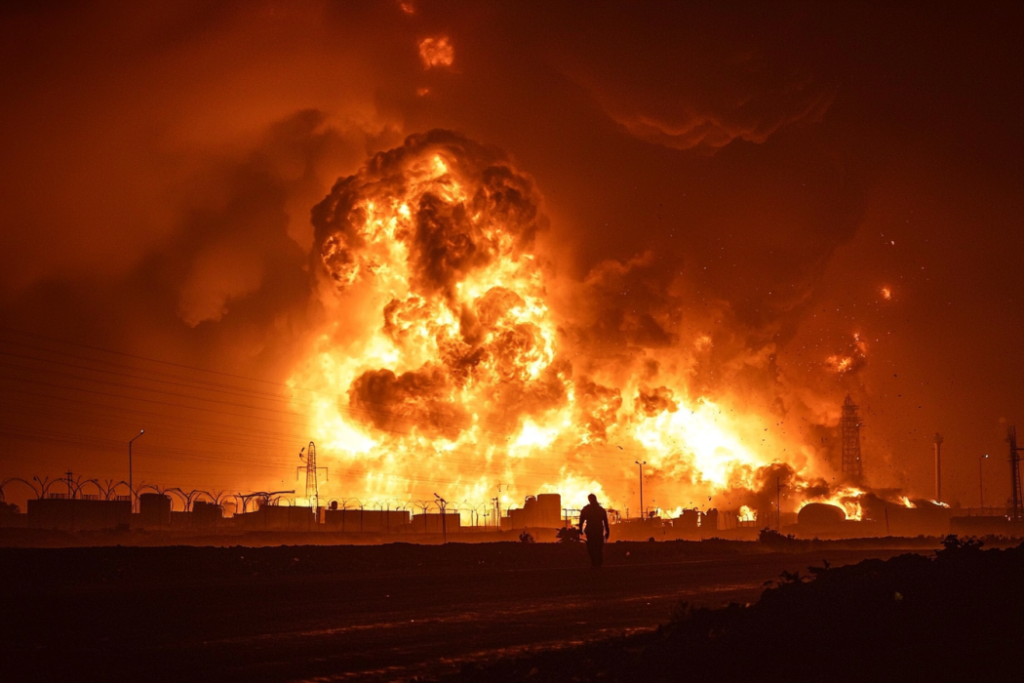
The ramifications of a conflict in the Middle East are staggering, touching not only upon regional stability but also global economic and political dynamics. The volatility in this region has long been a point of global anxiety, given its crucial role in the world’s energy supplies and strategic alliances.
Further destabilization could lead to disruptive scenarios that affect markets worldwide. The blocking of crucial maritime routes or destruction of key infrastructure could have a ripple effect far beyond the immediate region. In addition, the potential for refugee crises and humanitarian disasters cannot be overstated.
US Call for Ceasefire
In light of these dangers, the United States has stepped forward with a firm call for a ceasefire. The Biden Administration has underscored the necessity for diplomacy and negotiation to override the burgeoning conflict. “A ceasefire is essential,” stated a high-ranking US official. “We must work together to prevent further loss of life and restore stability to the region.”
The call for a ceasefire has received mixed responses. While some nations and international bodies have echoed the sentiment, others remain skeptical of its enforceability and long-term viability. Critics argue that without addressing the root causes of the conflict, any ceasefire would merely be a temporary fix.
Role of International Organizations
Organizations such as the United Nations and the European Union have also been vocal in their appeals for peace and dialogue. Resolutions have been proposed to send peacekeeping forces and mediate negotiations. However, the deeply entrenched hostilities and complex nature of the alliances make these initiatives challenging to implement.

Negotiation Prospects
Despite the growing tensions, there have been some glimmers of hope. Backchannel negotiations are reportedly underway, facilitated by neutral parties. Countries like Switzerland and Sweden have offered to mediate, leveraging their historically neutral stances to build trust among the otherwise adversarial parties.
“Peace is not just a moral imperative but a practical necessity,” emphasised one European diplomat. By creating an inclusive negotiation framework that addresses the interests and security concerns of all parties involved, there is a slim but real prospect for de-escalation.
Future Predictions
Experts are divided on what the future holds. Some suggest that the current escalation is a brinkmanship tactic employed by both sides to gain leverage in potential future negotiations. Others fear that miscalculations could lead to unintended consequences, spiraling into a broader conflict.
Strategic analysts caution against underestimating the potential for rapid developments. As a result, stakeholders are urged to remain vigilant and proactive in their efforts to contain the situation. The importance of crisis management and real-time intelligence cannot be overstated in such a volatile context.
Public Sentiment and Media Coverage
The media landscape has been inundated with coverage of the situation, with public sentiment largely shaped by evolving news reports. Social media platforms have become hotbeds of debate, with hashtags related to the crisis trending globally.
While some advocate for immediate military intervention, others call for restraint and diplomacy. The public discourse reflects the larger geopolitical divides, with varying narratives being propagated by different interest groups.
Regional Reactions
Within the Middle East, reactions have been equally mixed. Countries like Turkey have ramped up their diplomatic efforts, urging the international community to take decisive action. Meanwhile, Gulf states have been somewhat quieter, likely calculating their responses based on economic and political self-interest.
The role of non-state actors, such as militias and insurgent groups, adds another layer of complexity. Their actions and alliances could significantly affect the unfolding situation, making a comprehensive approach to conflict resolution all the more necessary.
Conclusion
The looming crisis in the Middle East is a multifaceted issue with broad implications. The Iranian minister’s dire warning serves as a stark reminder of the potential for disaster, while the United States’ call for a ceasefire underscores the urgency for diplomatic intervention.
The international community must act swiftly and decisively to navigate these turbulent waters. While the path forward may be fraught with challenges, the stakes are too high to allow inaction or complacency.
As we watch the situation unfold, the hope remains that cooler heads will prevail, and a pathway to sustainable peace will be found for the region.