

Introduction to Czech Cuisine
When it comes to food in the Czech Republic, prepare your taste buds for a hearty and flavorful journey through Central European culinary traditions. Czech cuisine is a rich tapestry woven from the country’s history, cultural influences, and local ingredients. At its core, traditional Czech food celebrates comfort, with a focus on hearty soups, savory sauces, fluffy dumplings, and locally sourced produce.
While Czech dishes might not have the global recognition of some other European cuisines, they form an integral part of the country’s identity. In the Czech Republic, food is more than sustenance; it’s a celebration of heritage and a source of national pride. From bustling Prague restaurants to cozy village pubs, Czech food is the heart and soul of the dining experience.
The Czech culinary landscape is characterized by its use of simple, hearty ingredients that reflect the country’s agricultural traditions. Root vegetables like carrots, celery, and parsnips feature prominently, as do potatoes, cabbage, and onions. Meat, particularly pork, beef, and poultry, plays a central role in many traditional Czech dishes. The cuisine also makes extensive use of dairy products, with cream sauces and cheeses appearing in various forms across different recipes.
One cannot discuss Czech cuisine without mentioning the importance of bread and dumplings. These staples are present at almost every meal, serving as the perfect accompaniment to saucy dishes and soups. Czech bread, with its dark, hearty character, is a testament to the country’s baking traditions, while the ubiquitous bread dumplings (knedlíky) are a unique aspect of Czech culinary culture that often surprises and delights visitors.


Traditional Czech Main Dishes
The roots of Czech cuisine can be traced back to the 19th century when the Czech lands were part of the Austro-Hungarian Empire. This historical context has shaped the diversity of Czech dishes, which have been influenced by neighboring countries such as Slovakia, Austria, and Hungary. The result is a unique culinary landscape with dishes that boast distinctive flavors and preparation methods.
Let’s explore some quintessential Czech dishes that showcase the best of traditional Czech cuisine:

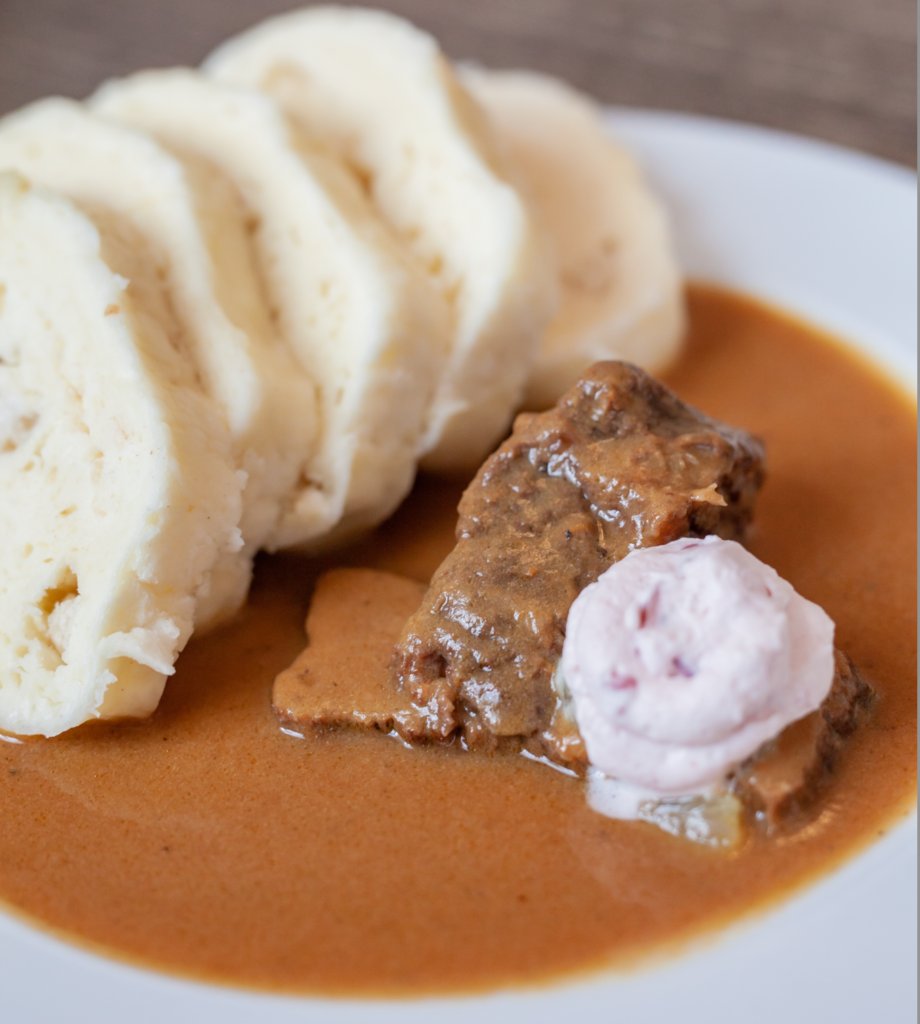
Svíčková na smetaně (Roast Sirloin in Sour Cream Sauce)
Svíčková is perhaps the most iconic of all Czech dishes, often served at festive occasions and family gatherings. This traditional Czech dish features tender, slow-cooked braised beef sirloin in a creamy vegetable sauce. The meat is typically marinated and then braised with a medley of root vegetables, including carrots, parsley root, and celery.
The real star of svíčková is its velvety sauce. After the meat is cooked, the vegetables are puréed and combined with cream to create a smooth, rich sauce that’s slightly tangy and sweet. Svíčková is traditionally served with a side of fluffy bread dumplings, perfect for soaking up every last drop of the delicious sauce. A dollop of cranberry sauce and a slice of lemon often accompany the dish, adding a bright, acidic contrast to the rich flavors.
The preparation of svíčková is a labor of love, often taking several hours to achieve the perfect balance of flavors. The meat is first marinated in a mixture of vinegar, wine, and spices, which helps to tenderize it and infuse it with flavor. Then, it’s slow-cooked with the vegetables until everything is tender and infused with rich, savory flavors. The sauce-making process is an art in itself, with each cook having their own secret techniques for achieving the perfect consistency and flavor balance.


Vepřo Knedlo Zelo (Roast Pork with Dumplings and Sauerkraut)
No discussion of Czech food would be complete without mentioning Vepřo Knedlo Zelo, a dish that embodies the essence of traditional Czech cuisine. This hearty meal consists of roasted pork, bread dumplings, and sauerkraut – a combination that has satisfied Czech appetites for generations.
The pork is usually slow-roasted until tender and juicy, often seasoned with caraway seeds for an extra layer of flavor. The bread dumplings, or “knedlíky,” are a staple of Czech cuisine. These soft, sliced dumplings are perfect for soaking up the savory pork juices. The sauerkraut, or “zelí,” provides a tangy contrast to the rich meat and dumplings, while also adding a healthy dose of probiotics to the meal.
Vepřo Knedlo Zelo is a testament to the Czech love for hearty, satisfying meals that combine different textures and flavors. It’s a dish that truly represents the comfort food aspect of Czech cuisine. Another popular festive dish is roast duck, often served with sauerkraut and dumplings, showcasing the Czech love for slow-cooked, tender meats.
The preparation of the bread dumplings is an art form in itself. Made from a mixture of flour, milk, eggs, and stale bread cubes, the dough is formed into large rolls and boiled. Once cooked, the dumplings are sliced and served alongside the meat and sauerkraut. The result is a perfectly soft yet slightly chewy texture that pairs beautifully with the juicy pork and tangy sauerkraut.
Smažený Řízek (Czech Schnitzel)
While schnitzel is often associated with Austrian cuisine, the Czech version, known as řízek, has become a beloved staple of Czech kitchens and restaurants. This dish consists of a thin cutlet of pork, chicken, or veal that is breaded and fried until golden and crispy.
The meat is typically pounded thin, then dipped in flour, beaten eggs, and breadcrumbs before being fried in oil or butter. The result is a crispy exterior that gives way to tender, juicy meat inside. Řízek is often served with a side of potato salad, a quintessential Czech side dish that combines boiled potatoes with carrots, peas, onions, and mayonnaise.
What sets Czech řízek apart from its Austrian counterpart is the common use of pork or chicken instead of veal, making it a more accessible and everyday meal for Czech families. It’s a popular choice for Sunday lunches and is often packed as a picnic food, tasting delicious even when served cold.


Czech Soups and Stews
In the Czech Republic, soups and stews hold a special place in the culinary tradition. These warming dishes are not just appetizers but often serve as meals in themselves, especially during the cold winter months. Czech soups are known for their rich flavors and use of local ingredients, making them a staple in Czech kitchens and restaurants alike.
Česnečka (Garlic Soup)
One of the most beloved Czech soups is Česnečka, a potent garlic soup that’s as flavorful as it is comforting. This traditional Czech dish is often touted as a cure-all, particularly effective against colds and hangovers – making it a popular choice in Czech pubs!
Česnečka typically consists of a clear, garlicky broth filled with croutons and sometimes small pieces of potato. The soup is often topped with grated cheese and a raw egg, which cooks slightly in the hot broth, adding richness and body to the soup. Some variations include small pieces of smoked meat or sausage for extra flavor and protein.
The intense garlic flavor of Česnečka is not for the faint-hearted, but for garlic lovers, it’s a true delight. The soup exemplifies the Czech approach to cooking: simple ingredients transformed into something hearty and satisfying.
Kulajda (Creamy Dill Soup)
Another popular Czech soup is Kulajda, a creamy potato soup that originates from South Bohemia. This hearty soup combines potatoes, mushrooms, dill, and sour cream, often topped with a poached egg. The result is a rich, tangy soup with a distinctive dill flavor that’s both comforting and refreshing. Dill is also used in the traditional Czech dill sauce, Koprová omáčka, which is often paired with dumplings and boiled beef.
The soup begins with a base of sautéed onions and mushrooms, to which potatoes and water or broth are added. Once the potatoes are tender, sour cream is stirred in to create a creamy consistency. Fresh dill is added generously, giving the soup its characteristic flavor and aroma. The poached egg on top adds extra richness and turns the soup into a complete meal.
Kulajda is a perfect example of how Czech cuisine makes the most of simple, local ingredients to create dishes with complex flavors and satisfying textures.
Bramboračka (Potato Soup)
Bramboračka is a traditional Czech potato soup that’s perfect for cold winter days. This thick, hearty soup is made with potatoes, carrots, celery, and mushrooms, often flavored with marjoram and garlic. Some versions also include smoked meat for added flavor and protein.
The soup starts with a base of sautéed vegetables, to which diced potatoes and mushrooms are added. The mixture is then simmered in water or broth until the potatoes are tender. Flour is often added to thicken the soup, giving it a creamy consistency without the need for dairy. The addition of marjoram gives bramboračka its distinctive aroma and flavor, setting it apart from other potato soups.
Bramboračka is often served in a bread bowl, adding an extra layer of heartiness to this already filling soup. It’s a staple in Czech households and a popular menu item in traditional Czech restaurants.

Czech Pastries and Desserts
Czech cuisine isn’t all about savory dishes – the country also boasts a delectable array of pastries and desserts. Czech sweets often feature a unique balance of sweet and sour tastes, incorporating local fruits and traditional preparation methods.
Trdelník
While its origins are debated, Trdelník has become a beloved street food and dessert in the Czech Republic, particularly popular among tourists in Prague. This sweet pastry is made from rolled dough that’s wrapped around a stick, then grilled and topped with a mixture of sugar and walnut mix.
The result is a hollow, cylindrical pastry with a crispy, caramelized exterior and a soft, chewy interior. Modern variations often fill the inside with various sweet fillings like Nutella, ice cream, or fruit compotes. While purists might argue about its authenticity as a traditional Czech dish, there’s no denying the popularity and appeal of Trdelník among visitors to the Czech Republic.
Kolache
Kolache are traditional Czech pastries that have found popularity beyond the borders of the Czech Republic, particularly in areas of the United States with significant Czech heritage. These sweet pastries consist of a round dough base with a depression in the center, which is filled with various sweet fillings.
Traditional fillings include poppy seed paste, fruit preserves (often plum, apricot, or cherry), and a sweet cheese mixture. The dough is typically made with enriched yeast dough, resulting in a soft, slightly sweet pastry that perfectly complements the flavorful fillings.
Kolache are often enjoyed as a breakfast pastry or an afternoon snack with coffee. They represent the Czech love for combining sweet and slightly tangy flavors in their desserts.
Ovocné Knedlíky (Fruit Dumplings)
Ovocné knedlíky are a unique Czech dessert that blurs the line between main course and sweet treat. These fruit-filled dumplings are often served as a main dish, particularly during the summer months when fresh fruits are abundant.
The dumplings are made by wrapping fruit (often whole strawberries, apricots, or plums) in a potato or curd cheese dough. They’re then boiled and served warm, topped with melted butter, sugar, and often a dollop of cream or crème fraîche. Some variations include a sprinkle of poppy seeds or ground walnuts for added texture and flavor. Some variations include a dollop of whipped cream, adding a light, airy contrast to the rich, fruity filling.
What makes ovocné knedlíky truly special is the contrast between the warm, soft dumpling exterior and the hot, juicy fruit inside. The combination of the fruit’s natural sweetness with the rich toppings creates a dessert that’s uniquely Czech and utterly delicious.


Czech Street Food and Snacks
The streets of Czech cities, especially Prague, offer a variety of quick and delicious snacks that showcase the more casual side of Czech cuisine. These street foods provide a perfect introduction to Czech flavors for visitors and remain popular among locals for quick meals or late-night snacks.
Smažený sýr (Fried Cheese)
Smažený sýr, or fried cheese, is a beloved Czech snack that’s found its way onto many restaurant menus as well. This simple yet satisfying dish consists of a thick slice of cheese (usually Edam or a similar semi-hard cheese) that’s breaded and deep-fried until golden brown and crispy on the outside, while remaining gooey and melted on the inside.
Smažený sýr is typically served with tartar sauce and a side of French fries or boiled potatoes. It’s a popular vegetarian option in a cuisine that often emphasizes meat dishes. The crispy exterior and molten interior create a delightful textural contrast, while the mild flavor of the cheese pairs perfectly with the tangy tartar sauce.
Párek v rohlíku (Hot Dog in a Roll)
While hot dogs are hardly unique to Czech cuisine, the Czech version, párek v rohlíku, has its own special charm. This street food consists of a long, thin sausage inserted into a hollowed-out roll. What sets it apart is the method of preparation and serving.
The roll is hollowed out using a special heated metal spike, which not only creates space for the sausage but also warms the bread. The sausage is then inserted, and condiments like ketchup, mustard, or mayo are squirted directly into the roll alongside the sausage. This method ensures that every bite contains a perfect balance of bread, sausage, and condiments.
Párek v rohlíku is a popular quick snack, often enjoyed on the go or as a late-night treat after an evening of Czech beer.
Langoš
Although originally Hungarian, langoš has been enthusiastically adopted into Czech street food culture. This deep-fried flatbread is typically topped with garlic, cheese, and ketchup, creating a deliciously indulgent snack.
The dough for langoš is made from flour, yeast, and salt, then formed into a flat, round shape and deep-fried until golden and crispy. Once fried, it’s immediately rubbed with garlic and topped with grated cheese and ketchup. Some variations include additional toppings like sour cream or ham.
The result is a hot, crispy bread with a soft interior, fragrant with garlic and rich with melted cheese. It’s a popular festival food and can often be found at street markets and fairs throughout the Czech Republic.

Czech Beer Culture
No discussion of food in the Czech Republic would be complete without mentioning the country’s renowned beer culture. The Czech Republic boasts the highest beer consumption per capita in the world, and beer is deeply intertwined with Czech cuisine and social life.
Czech beer, particularly the light lagers like Pilsner, is known for its crisp, clean taste and golden color. Many traditional Czech dishes are designed to pair perfectly with a cold glass of beer. In Czech pubs, you’ll often find people enjoying their pivo (beer) alongside snacks like pickled cheese (nakládaný hermelín), Prague ham, or utopenec (pickled sausages).
The quality of Czech beer is a source of national pride, and visiting a Czech pivnice (beer hall) is an essential part of experiencing the country’s food culture. Whether you’re enjoying a hearty meal or just snacking, a Czech beer is the perfect accompaniment to your culinary adventure.
Beer Snacks
Czech beer culture has given rise to a variety of snacks specifically designed to be enjoyed with beer. These “pivní pochutiny” (beer snacks) are an integral part of the Czech pub experience:
- Nakládaný Hermelín: This is a soft, Camembert-style cheese that’s marinated in oil with spices and onions. The marination process gives the cheese a tangy, spicy flavor that pairs perfectly with beer.
- Utopenec: Literally translating to “drowned man,” this snack consists of pickled sausages served with onions and peppers. The tangy, spicy flavor of the pickled sausage is an excellent complement to the crisp taste of Czech beer.
- Topinky: These are fried bread slices, often rubbed with garlic and served with a variety of toppings like cheese spread, meat spread, or simply on their own as a crunchy accompaniment to beer.
- Bramboráky: These crispy potato pancakes are often enjoyed as a hearty beer snack. Made from grated potatoes, garlic, and marjoram, they’re fried until golden and crispy.
Famous Czech Beers
While Pilsner Urquell might be the most internationally recognized Czech beer, there are many other excellent brews to try:
- Budweiser Budvar: Not to be confused with the American Budweiser, this Czech lager has been brewed in České Budějovice since 1895. It’s known for its golden color and slightly sweet, hoppy flavor.
- Kozel: Produced in Velké Popovice since 1874, Kozel offers both light and dark varieties. The dark Kozel is particularly popular, with a rich, caramel-like flavor that pairs well with hearty Czech dishes.
- Staropramen: Another Prague-based brewery, Staropramen produces a range of beers including their popular light lager and a distinctive unfiltered beer.
- Krušovice: With a brewing tradition dating back to the 16th century, Krušovice offers both light and dark lagers known for their balanced flavor profiles.
- Bernard: This family-owned brewery produces unpasteurized beer, resulting in a fresher taste. Their dark lager is particularly praised for its complex flavor.
Beer in Czech Cuisine
Beer isn’t just for drinking in Czech culture – it’s also used as an ingredient in various dishes. Here are a few examples of how beer is incorporated into Czech cuisine:
- Pivní sýr: This “beer cheese” is a spreadable cheese mixed with beer, creating a pungent, flavorful spread perfect for rye bread.
- Pivní guláš: This hearty goulash is made with beef slow-cooked in beer, resulting in tender meat and a rich, flavorful sauce.
- Pivní polévka: Beer soup might sound unusual, but this traditional Czech dish combines beer with cream, spices, and often chunks of bread for a unique and satisfying meal.
- Pivní marinády: Many Czech meat dishes use beer in their marinades, adding depth of flavor and helping to tenderize the meat.
Regional Specialties
While many Czech dishes are enjoyed throughout the country, each region has its own culinary specialties that reflect local ingredients and traditions:
Bohemia
- Kulajda: This creamy potato soup with mushrooms and dill, topped with a poached egg, is a specialty of South Bohemia.
- Svíčková: While enjoyed nationwide, this sirloin in cream sauce is particularly associated with Bohemian cuisine.
- Karlsbader Oblaten: These large, thin wafers originate from the spa town of Karlovy Vary (Carlsbad) and are often filled with nuts and sugar.
Moravia
- Moravský vrabec: This “Moravian Sparrow” dish is actually made with pork, not sparrow, and is typically served with spinach and potato dumplings.
- Slovácký guláš: This Moravian-style goulash is made with beef and pork and is known for its spicy kick.
- Olomoucké tvarůžky: These pungent, aged cheese from the city of Olomouc have a protected geographical indication status in the EU.
Silesia
- Slezské nebe: “Silesian Heaven” is a unique dish made with smoked meat, sausages, and dried fruits, typically served with potato dumplings.
- Biała kiełbasa: This white sausage, while also common in Poland, is a popular Easter dish in the Silesian region of the Czech Republic.

Modern Czech Cuisine
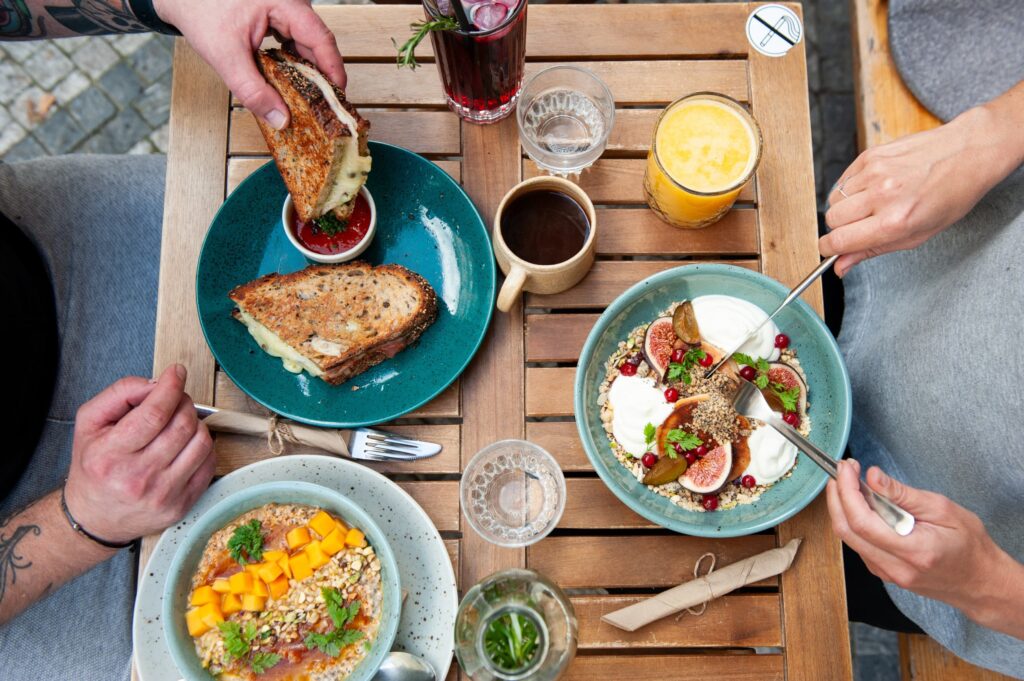
While traditional dishes remain popular, modern Czech chefs are also innovating and elevating Czech cuisine:
- Fusion Cuisine: Some chefs are combining traditional Czech flavors with international culinary techniques, creating unique fusion dishes.
- Farm-to-Table Movement: There’s a growing emphasis on using locally sourced, seasonal ingredients, leading to fresher, more sustainable versions of classic Czech dishes.
- Vegetarian and Vegan Adaptations: As dietary preferences change, many Czech restaurants now offer vegetarian or vegan versions of traditional dishes, like smažený sýr made with plant-based cheese or vegetable-based gulášs.
- Wine Culture: While beer remains king, Czech wine, particularly from the Moravia region, is gaining recognition. Some chefs are exploring food and wine pairings that highlight both Czech wines and cuisine.
Conclusion
Czech cuisine offers a delightful journey through the country’s history, culture, and local ingredients. From the rich, creamy sauces of svíčková to the crispy, indulgent smažený sýr, traditional Czech dishes provide a comforting and satisfying dining experience. The variety of flavors and textures in Czech food reflects the country’s position at the crossroads of Central Europe, incorporating influences from neighboring cuisines while maintaining its unique character.
The Czech Republic’s culinary landscape is as diverse as its geography, with each region offering its own specialties and flavors. Whether you’re savoring a bowl of garlicky česnečka in a cozy Prague pub, enjoying freshly baked kolache in a small Bohemian village, or sampling Moravian wines with local cheeses, you’re experiencing a vital part of Czech culture and tradition.
Czech cuisine is more than just fuel; it’s a celebration of community, history, and the simple pleasures of life. The long-standing traditions of Czech cooking, from the hearty soups that warm winter evenings to the fruit-filled dumplings that celebrate summer’s bounty, tell the story of a people deeply connected to their land and their heritage.
And of course, no exploration of Czech cuisine would be complete without appreciating the integral role of beer. More than just a beverage, Czech beer is a cultural institution, pairing perfectly with the country’s hearty dishes and serving as a social lubricant in the nation’s bustling pubs and beer gardens.
As Czech cuisine continues to evolve, with chefs putting modern spins on traditional recipes and adapting to changing dietary preferences, it maintains its core identity – comfort food at its finest, meant to be shared with friends and family.
So, the next time you find yourself in the Czech Republic, be sure to venture beyond the tourist spots and seek out these traditional Czech dishes. Pull up a chair at a local hospoda, order a plate of svíčková or vepřo-knedlo-zelo, raise a glass of golden Czech beer, and toast to the rich culinary heritage of this Central European gem. Your taste buds will thank you for the delicious adventure through one of Europe’s most underrated culinary traditions. Na zdraví!