

1. Introduction: The Crossroads of Europe
The cultural and historical trajectory of the Czech people is a testament to the resilience of a nation situated at the geopolitical and geographical heart of Europe. Enclosed by the Bohemian Massif to the west and the Carpathian Mountains to the east, the Czech lands, comprising the historical regions of Bohemia, Moravia, and Czech Silesia, have served for over a millennium as a crucible where Slavic identity intersects with Germanic influence. This unique positioning has fostered a culture characterized by intellectual depth, a distinctive brand of dark humor, and a profound capacity for adaptation and survival amidst shifting imperial tides.

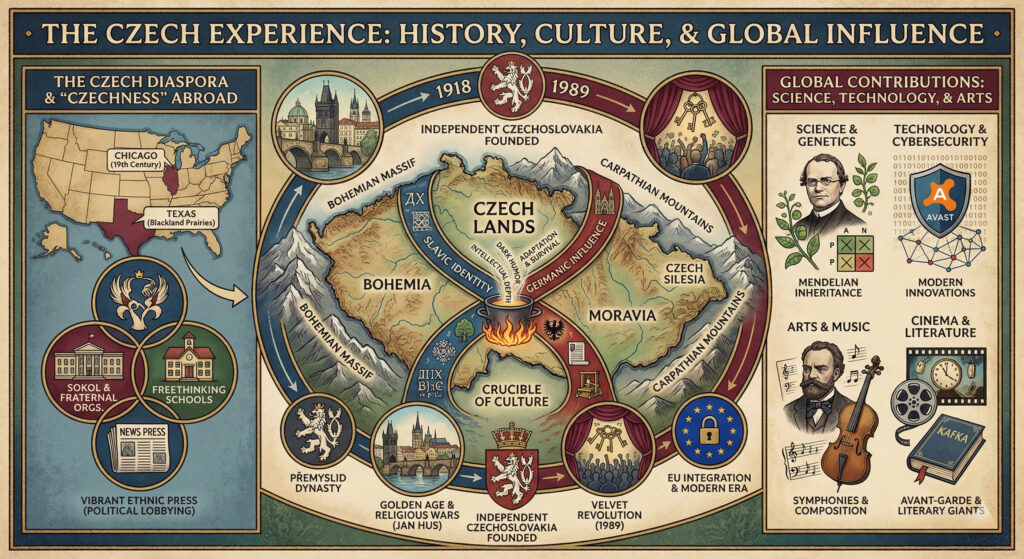
The narrative of the Czechs is not confined to the boundaries of the modern Czech Republic. It is equally the story of a vast and influential diaspora, particularly in the United States, where Czech immigrants established thriving communities that preserved the language and traditions of the homeland during eras of suppression. From the muddy streets of 19th-century Chicago to the blackland prairies of Texas, Czech Americans built a parallel society anchored by fraternal organizations, freethinking schools, and a vibrant ethnic press. The preservation of “Czechness” abroad was not merely an act of nostalgia but a political necessity, instrumental in the lobbying efforts that led to the founding of an independent Czechoslovakia in 1918.
This report provides an exhaustive examination of the Czech experience. It explores the deep historical currents that shaped the nation, from the early Přemyslid dynasty to the Velvet Revolution and subsequent integration into the European Union. It analyzes the sociological fabric of the Czech diaspora, detailing the mechanisms of cultural retention employed by communities in the New World. Furthermore, it highlights the disproportionate contributions of Czechs to global science, technology, and the arts, from the pioneering genetics of Gregor Mendel to the modern cybersecurity innovations of Avast, and from the symphonies of Dvořák to the avant-garde cinema of the 1960s. Through this multi-layered analysis, a picture emerges of a nation that, despite its modest size, has exerted a formidable influence on the cultural and intellectual development of the modern world.

2. Historical Foundations and Political Evolution
2.1 Origins and the Formation of Identity
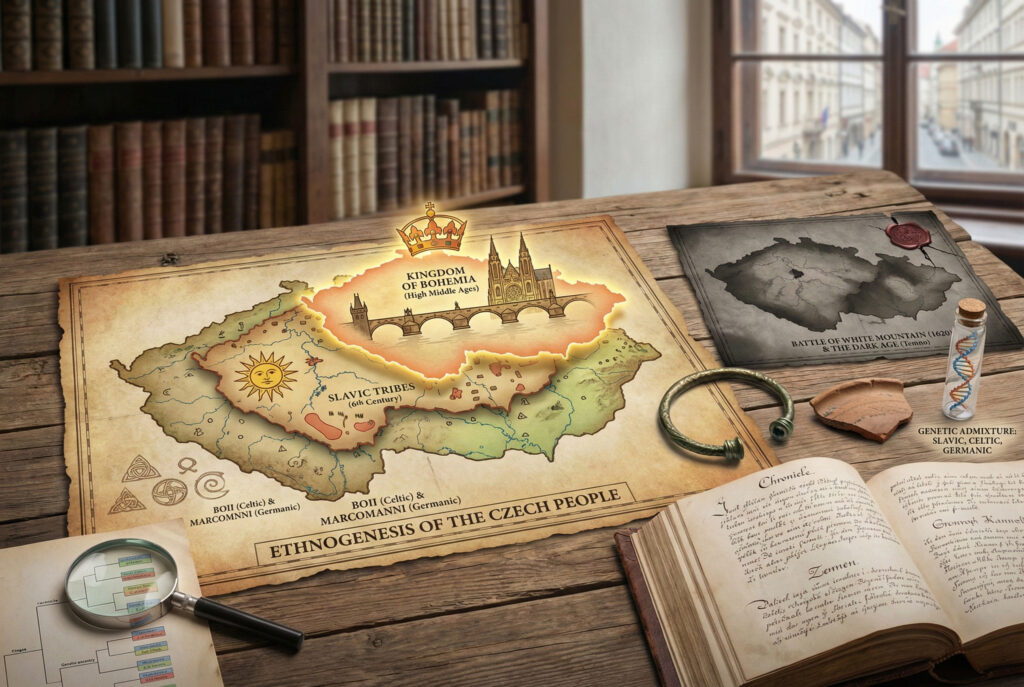
The ethnogenesis of the Czech people is a complex process involving the assimilation of early Slavic tribes who arrived in the region during the 6th century into a landscape previously inhabited by Celtic (Boii) and Germanic (Marcomanni) peoples. These early Slavic tribes were part of the broader group of Slavic people, an ethnolinguistic community that includes Czechs, Slovaks, and other West Slavic nations, sharing common historical origins and cultural connections. This deep historical stratification is reflected in modern genetic studies, which indicate that while the Czech population is linguistically and culturally West Slavic, it shares significant genetic markers with its Germanic neighbors. Czech ancestry is diverse, shaped by the admixture of Slavic, Celtic, and Germanic roots, as confirmed by genetic studies and historical migrations. Although Czechs are genetically closest to their eastern neighbors, the Slovaks, there is no sharp genetic boundary separating them from the populations of Austria or eastern Germany, suggesting centuries of admixture and coexistence.
The Kingdom of Bohemia emerged as a significant regional power in the High Middle Ages, particularly under the Luxembourg dynasty. The reign of Charles IV (1346–1378), who was also Holy Roman Emperor, is often viewed as a Golden Age. It was during this period that Prague was transformed into a European metropolis, endowed with landmarks such as the Charles Bridge and St. Vitus Cathedral, which remain central to Czech cultural identity today.
However, the Czech historical consciousness is equally defined by the trauma of the Battle of White Mountain in 1620. The defeat of the rebellious Protestant Bohemian estates by the Habsburg forces marked the end of Czech independence for three centuries. The subsequent “Dark Age” (temno) involved the forced re-Catholicization of the population and the suppression of the Czech language in favor of German, resulting in fewer people who spoke Czech during this period due to forced Germanization. This period ingrained a deep-seated skepticism of authority and a reliance on cultural resistance that would resurface repeatedly in later centuries.
2.2 The National Revival and the Struggle for Statehood
The nineteenth century witnessed the Czech National Revival, a movement led by intellectuals, philologists, and historians who sought to reconstruct a modern Czech nation through language and culture. This period was crucial for the development and preservation of Czech ethnic identity, as efforts focused on reviving the Czech language, traditions, and national consciousness. Figures like František Palacký and Josef Jungmann worked to elevate Czech from a dialect of the peasantry to a language capable of high literature and science. At the time, the Czech lands were under the rule of the Austrian Empire, which shaped the political context and challenges faced by the revivalists. This revival was not merely academic; it was the engine of political emancipation that culminated in the collapse of the Austro-Hungarian Empire at the end of World War I.
The establishment of Czechoslovakia in 1918 was heavily influenced by the Czech diaspora in the United States. The Czechoslovak National Council, led by Tomáš Garrigue Masaryk, Edvard Beneš, and Milan Rastislav Štefánik, operated effectively in exile. The Czech National Alliance, founded in Chicago in 1914, mobilized Czech Americans to lobby the U.S. government and raise funds for the independence cause. The relationship between Masaryk and U.S. President Woodrow Wilson was pivotal; Masaryk used the U.S. Constitution as a model for the new republic, and the Pittsburgh Agreement of 1918 was a foundational document for the common state of Czechs and Slovaks.
2.3 The Trauma of Totalitarianism (1938–1989)
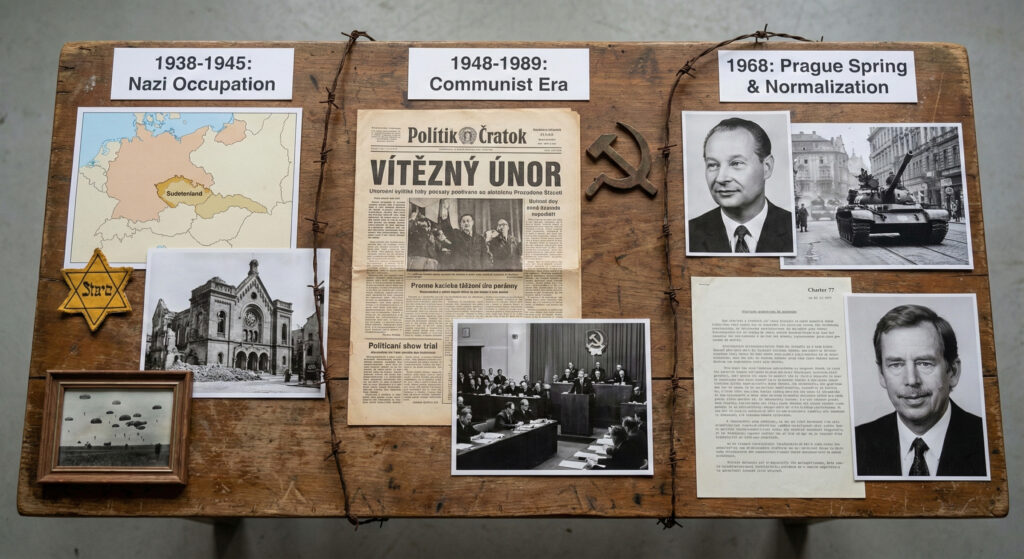
The 20th century subjected the Czech nation to two brutal totalitarian regimes. The Munich Agreement of 1938, which ceded the Sudetenland to Nazi Germany, and the subsequent Nazi occupation of the remaining Czech lands in 1939 during World War II, devastated the nation’s sovereignty. The Jewish population of Bohemia and Moravia was nearly annihilated in the Holocaust, a loss that fundamentally altered the cultural mosaic of cities like Prague. Resistance was heroic but costly; the assassination of Acting Reich Protector Reinhard Heydrich in 1942 by Czechoslovak paratroopers remains the most significant act of anti-Nazi resistance in occupied Europe, though it triggered horrific reprisals, including the liquidation of the village of Lidice.
Liberation in 1945 was quickly overshadowed by the rise of Communism. The Communist Party of Czechoslovakia (KSČ), capitalizing on the Soviet liberation and disillusionment with the West after Munich, seized power in a coup d’état in February 1948. This marked the beginning of the communist era, a forty-year dictatorship characterized by the nationalization of industry, the suppression of the church, and the persecution of political opponents. The Communist regime fundamentally reshaped the social structure, attempting to erase the bourgeois traditions of the First Republic.
The Prague Spring of 1968, an attempt by reformist communists led by Alexander Dubček to create “socialism with a human face,” represented a brief thaw. The subsequent invasion by Warsaw Pact troops in August 1968 crushed these hopes and ushered in the “normalization” era, a period of stagnation and moral compromise. Dissent was maintained by a small group of intellectuals, most notably the signatories of Charter 77, including the playwright Václav Havel, who emphasized the importance of “living in truth”.
2.4 The Return to Democracy
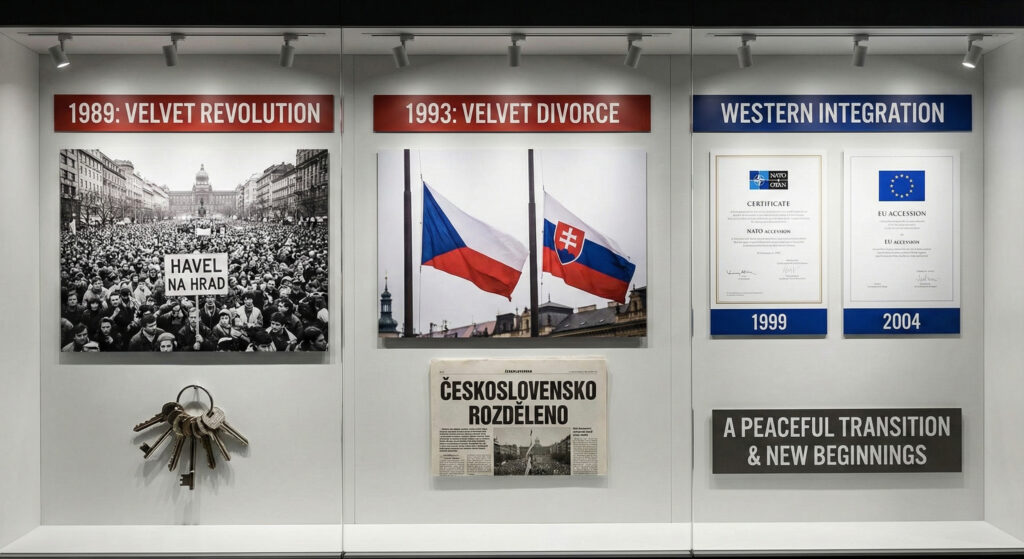
The Velvet Revolution of November 1989 was a swift and non-violent transfer of power that ended Communist rule. The election of Václav Havel as president symbolized the victory of the cultural and intellectual resistance. The subsequent dissolution of Czechoslovakia in 1993, the “Velvet Divorce”, was a peaceful separation driven by divergent political priorities in Prague and Bratislava. Since then, the Czech Republic has solidly anchored itself in Western structures, joining NATO in 1999 and the European Union in 2004.
Table 1: Watershed Events in Modern Czech History
| Year | Event | Historical Impact |
| 1918 | Declaration of Independence | Formation of Czechoslovakia; T.G. Masaryk becomes the first president. |
| 1938 | Munich Agreement | Cession of borderlands to Germany; collapse of the First Republic. |
| 1948 | Communist Takeover | The KSČ seizes total power; beginning of the totalitarian era. |
| 1968 | Warsaw Pact Invasion | End of the Prague Spring reforms; onset of “Normalization.” |
| 1989 | Velvet Revolution | Fall of the Communist regime; restoration of democracy. |
| 1993 | Dissolution of Czechoslovakia | Formation of the independent Czech Republic. |
| 2004 | EU Accession | Integration into the European single market and political structures. |
3. Geography and Demographics
3.1 The Physical Landscape
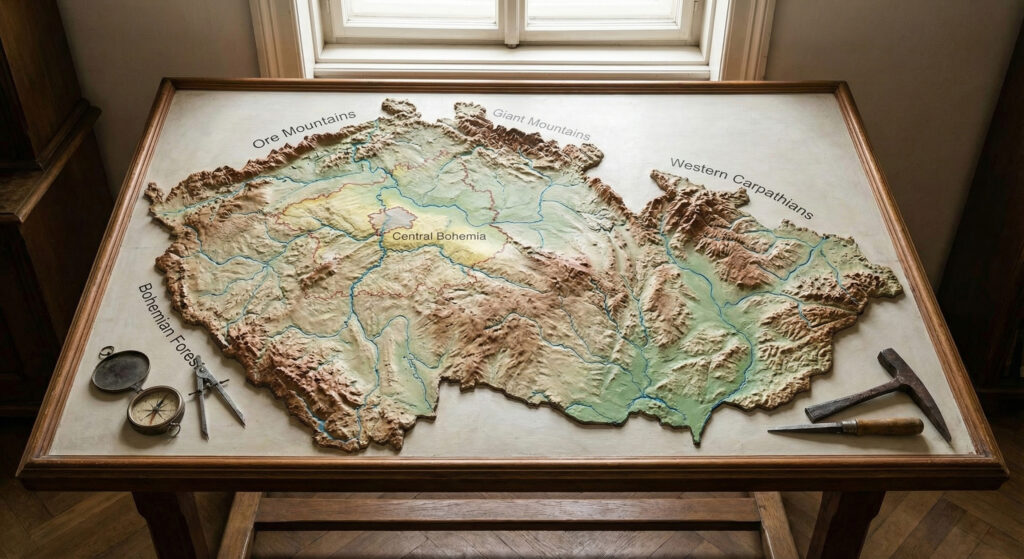
The geography of the Czech Republic has historically dictated its settlement patterns and economic capabilities. The country is divided into two main geological provinces: the Bohemian Massif in the west and the Western Carpathians in the east. The Bohemian Massif, geologically older and more stable, forms a basin surrounded by mountain ranges, the Ore Mountains (Krušné hory), the Giant Mountains (Krkonoše), and the Bohemian Forest (Šumava). This natural fortress has historically protected the Bohemian basin while simultaneously isolating it. Central Bohemia, located within this basin, is a region of particular historical and cultural significance, playing a key role in the broader context of Bohemia and Czech territorial identity.
The climate is temperate and transitional, featuring warm summers and cold, cloudy winters. This climate supports a diverse agricultural sector, with the fertile lowlands of the Elbe and Morava rivers being ideal for the cultivation of wheat, barley, and sugar beets, the latter being a critical industrial crop since the 19th century.
3.2 Demographics and the Aging Crisis
Contemporary demographics pose a significant challenge to the Czech state. The population, hovering around 10.9 million, is characterized by a low birth rate and increasing longevity, leading to a rapidly aging society. The “Index of Ageing”, the number of persons aged 65+ per 100 children aged 0–14, has been rising steadily. As of 2024, nearly 21% of the population is over the age of 65, placing immense strain on the pension and healthcare systems.
Historically a homogenous society, the Czech Republic has recently experienced a shift due to migration. The most significant demographic event in recent years has been the influx of refugees from Ukraine following the 2022 Russian invasion. The Czech Republic hosted the highest number of refugees per capita in the EU, with over 350,000 individuals granted temporary protection by 2024. This migration has temporarily offset population decline but presents long-term integration challenges.
4. The Czech Diaspora: A Transatlantic Legacy
4.1 The Waves of Immigration
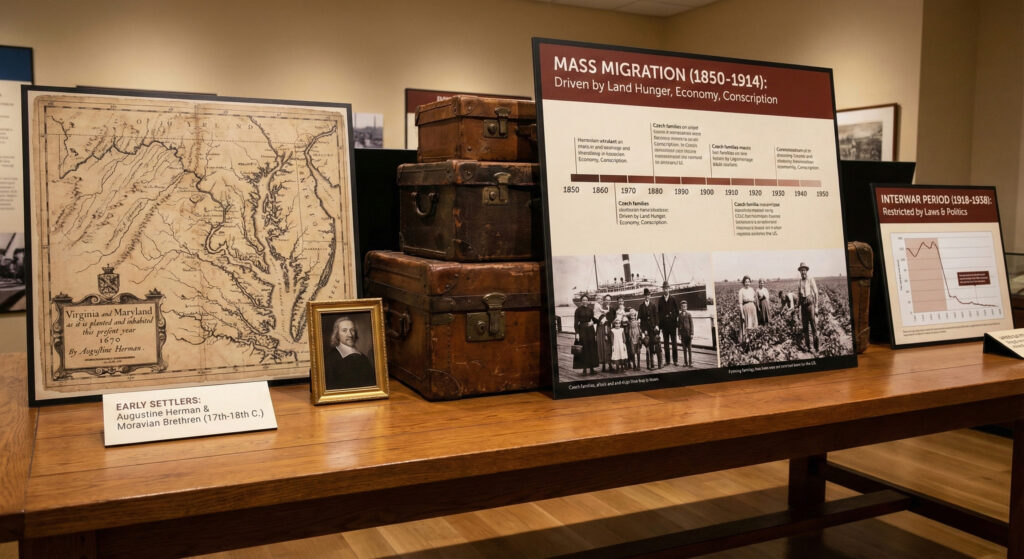
The movement of Czechs to the New World was not a singular event but a series of waves driven by distinct pressures. This process of Czech immigration involved multiple periods of migration, each shaped by unique historical and social factors. The first significant, though small, group was the Moravian Brethren in the 18th century, who settled in Pennsylvania and Georgia seeking religious freedom. However, the mass migration began after the failed revolutions of 1848 in Europe. Between 1850 and 1914, hundreds of thousands of Czechs left the Austro-Hungarian Empire, driven by land hunger, economic stagnation in the countryside, and the desire to escape military conscription. Czechs immigrated in large numbers during this period, establishing vibrant communities across the United States. Migration decreased significantly between the world wars due to political changes in Europe and restrictive U.S. immigration laws.
Early figures in this history include Augustine Herman (1621–1686), a Bohemian surveyor and merchant who became one of the largest landowners in 17th-century Maryland. His map of Virginia and Maryland was a cartographic masterpiece of the colonial era, and his estate, “Bohemia Manor,” stands as the first major Czech footprint in America. These early Czech settlers laid the groundwork for future waves of Czech communities in the United States.
4.2 Settlement Patterns and “Foreign White Stock”
Unlike many immigrant groups who remained in coastal industrial centers, Czech immigrants frequently sought agricultural land, mirroring the agrarian lifestyle they left behind. This preference led to the formation of distinct Czech settlement patterns across the United States, where Czech settlers established vibrant communities. By the early 20th century, the United States Bureau of the Census identified a significant population of “foreign white stock” originating from the Czech lands. In the 1910 and 1920 censuses, enumerators were instructed to distinguish “Bohemians” and “Moravians” from Austrians, acknowledging their distinct linguistic and cultural identity despite their imperial citizenship. By 1940, the census recorded over 62,000 individuals of Czech stock in Texas alone, with many Czechs recognized as a prominent group in these regions.
The primary centers of settlement included:
- Chicago, Illinois: Often called the “second largest Czech city” in the world during the late 19th century. The Pilsen neighborhood became the epicenter of urban Czech life, and strong Czech communities developed throughout the city.
- Texas: A unique rural settlement belt formed in Fayette, Lavaca, and Austin counties. Towns like Hostyn, Praha, and West became cultural enclaves where the language survived well into the late 20th century, and Czech communities thrived.
- The Midwest: States like Nebraska, Iowa, and Wisconsin attracted thousands of farmers. Wilber, Nebraska, was officially designated the “Czech Capital of Nebraska” and continues to host massive annual festivals, reflecting the enduring presence of Czech communities.
4.3 Institutional Infrastructure: Preservation of Identity
The survival of Czech culture in the United States was not accidental; it was engineered through a robust network of institutions.
Fraternal Organizations: Life on the frontier and in industrial cities was precarious. To provide security, immigrants formed benevolent societies. The Czech-Slovak Protective Society (CSPS) was founded in St. Louis in 1854. It provided life insurance and burial benefits. In addition to these services, many communities also established a loan association to help members finance homes, businesses, and community projects. However, regional economic differences led to schisms; Texas Czechs, finding the premiums for industrial workers in the North too high relative to their agrarian risks, split to form the Slavonic Benevolent Order of the State of Texas (SPJST) in 1897. Similarly, the Western Fraternal Life Association (WFLA) (formerly ZCBJ) formed in 1897 in Iowa following disagreements within the CSPS. These organizations built community halls that served as the social anchors and cultural centers of Czech America.
The Sokol Movement: Imported from Prague, the Sokol (Falcon) organization combined physical gymnastics with nationalist education. The first American Sokol unit was established in St. Louis in 1865. In Chicago, the Slovanska Lipa (Slavic Linden) organization, founded in 1861, eventually merged with Sokol units to form a powerful cultural force. These halls hosted theater productions, libraries, and language classes, ensuring the physical and intellectual fitness of the community.
The Ethnic Press: Literacy was exceptionally high among Czech immigrants (nearly 99%). This fueled a prolific ethnic press. The Czech newspaper Svornost (Concord), founded in Chicago in 1875 by August Geringer, became the first Czech daily in the U.S. and a powerful voice for freethinkers (secularists). In Wisconsin, Karel Jonáš published Slavie, which guided thousands of immigrants in their adaptation to American life. In Texas, the Svoboda newspaper played a similar role. These publications were vital for maintaining the Krasna Amerika (Beautiful America) ideal, maintaining ethnic identity and community cohesion, while keeping the community informed about the struggle for independence in Europe.
4.4 Religious Life: Catholic and Freethinker Divides
The Czech American community was deeply divided between Catholics and “Freethinkers” (Svobodomyšlenkáři), who rejected the Catholic Church as a tool of Habsburg oppression. This schism shaped the community’s infrastructure. The St. John Nepomuk Church in St. Louis, established in 1854, was the first Czech parish in America and marked the foundation of the Czech Catholic Church as a key institution in Czech American communities. The establishment of these churches was often led by dedicated Catholic priests who played a crucial role in guiding and organizing Czech immigrants. In Chicago, the St. Procopius parish (founded 1875) became a monumental center for Czech Benedictines, eventually establishing St. Procopius College (now Benedictine University). Conversely, Freethinkers established their own schools, cemeteries, and secular Sunday schools to propagate Czech culture without religious dogma.
Table 2: Major Czech American Fraternal Organizations
| Acronym | Full Name | Founded | Origin | Primary Function |
| CSPS | Czech-Slovak Protective Society | 1854 | St. Louis, MO | Oldest fraternal benefit society; forerunner to CSA. |
| Sokol | American Sokol Organization | 1865 | St. Louis, MO | Gymnastics, physical fitness, national pride. |
| SPJST | Slavonic Benevolent Order of the State of Texas | 1897 | La Grange, TX | Life insurance and community halls for Texas Czechs. |
| WFLA | Western Fraternal Life Association (ZCBJ) | 1897 | Cedar Rapids, IA | Fraternal insurance, formed by Western secession from CSPS. |
| CSA | Czechoslovak Society of America | 1933 | Lombard, IL | Merger of CSPS and other societies; oldest continuous fraternal. |
5. Culture, Language, and Traditions
5.1 The Czech Language
Czech is a West Slavic language notorious for its complex morphology and difficult consonant clusters. For the Czech nation, language was the primary fortress against German assimilation. During the National Revival, the language was codified and modernized. In the diaspora, particularly in Texas, a unique dialect known as Texas Czech evolved. Isolated from the linguistic developments in Europe, it retained archaic Moravian forms while absorbing English vocabulary for modern farming equipment and American concepts. By the late 20th century, scholars like Clinton Machann documented the decline of this dialect in works like Krasna Amerika, noting how the language shifted from a daily utility to a symbolic marker of heritage.
5.2 Literature and the Intellectual Tradition
Czech literature is world-renowned for its exploration of the human condition under pressure. Franz Kafka, though writing in German, is inseparable from the atmosphere of Prague. His works depict the alienation of the individual in a bureaucratic labyrinth. Jaroslav Hašek created the character of the “Good Soldier Švejk,” whose bumbling passive resistance became a national archetype for dealing with authority. In the 20th century, Milan Kundera (The Unbearable Lightness of Being) and Bohumil Hrabal brought Czech literature to a global audience, often focusing on the tragicomic aspects of life under totalitarianism.
5.3 Music and Folk Traditions
“Co Čech, to muzikant” (Every Czech is a musician) is a saying that rings true in the nation’s history. Bedřich Smetana and Antonín Dvořák are the pillars of Czech classical music. The rich tradition of Czech music, spanning from the Renaissance to modern times, has significantly influenced both classical and folk genres. Dvořák’s time in the United States (1892–1895) was particularly influential; he composed his New World Symphony in New York and spent a famous summer in the Czech community of Spillville, Iowa, where he played the organ at the local St. Wenceslaus Church.
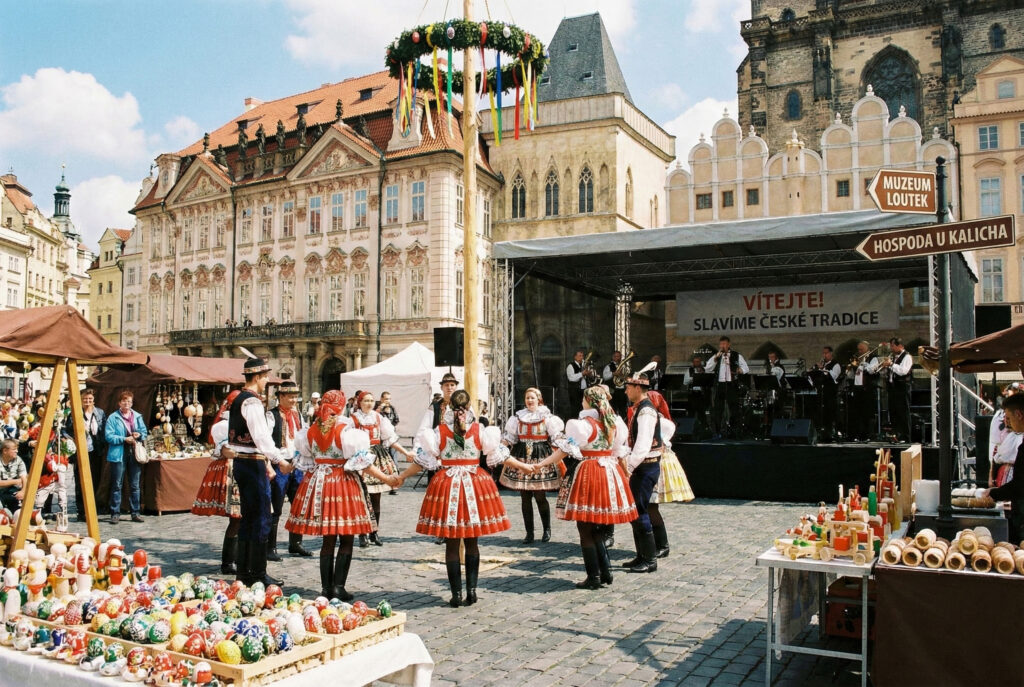
Folk traditions remain vibrant. Ethnic music, as a reflection of Czech cultural heritage, continues to play a vital role in preserving national identity. The polka, originating in Bohemia in the 1830s, became a global dance craze. In the Czech Republic, traditions like the Pomlázka on Easter Monday, where men gently whip women with braided willow switches to ensure health and youth, remain widely practiced, though sometimes controversial in modern contexts. Another key event is Čarodějnice (Witch Burning) on April 30th, a bonfire festival marking the end of winter that parallels Walpurgis Night.
6. Science, Industry, and Innovation
6.1 Historical Pioneers
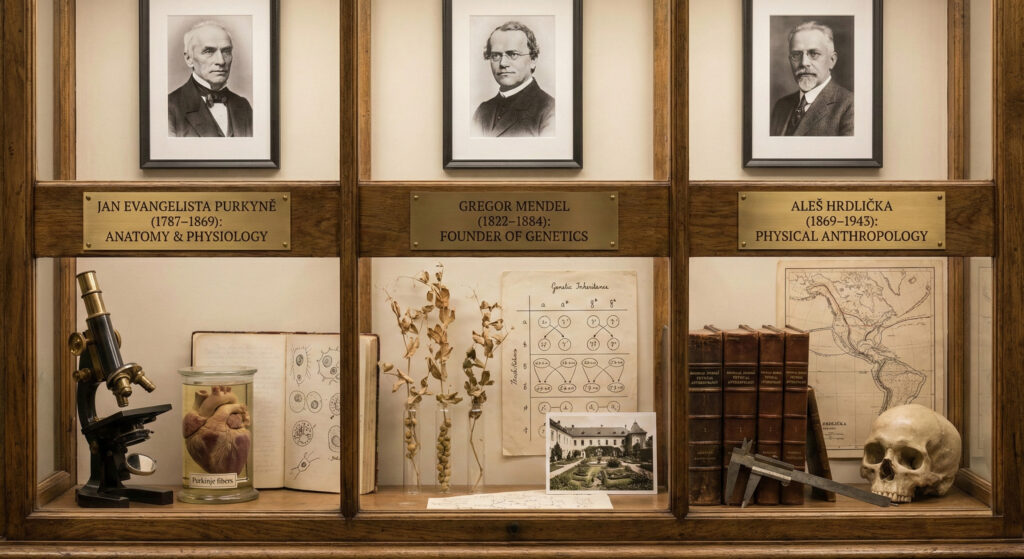
The Czech lands were the industrial powerhouse of the Austro-Hungarian Empire, and this technical prowess is evident in its scientific history. Jan Evangelista Purkyně (1787–1869) was a giant in anatomy and physiology, discovering the Purkinje fibers of the heart. Gregor Mendel (1822–1884), working in an abbey in Brno, established the laws of inheritance, founding the science of genetics.
In the realm of physical anthropology, Aleš Hrdlička (1869–1943) stands out. Born in Humpolec and immigrating to the U.S. as a teenager, he became the first curator of physical anthropology at the Smithsonian Institution. He founded the American Journal of Physical Anthropology and was a seminal figure in the study of human migration to the Americas, though his views on race and collecting practices are viewed critically through a modern lens.
6.2 Modern Innovation and Industry
The Czech Republic continues to be an industrial and technological leader in Central Europe.
- Automotive: The country is one of the world’s largest car producers per capita. Škoda Auto, founded in 1895, remains a source of immense national pride and a key driver of the economy.
- Nanotechnology: The Czech Republic is a global hub for nanofiber production. The technology for the industrial production of nanofibers was developed at the Technical University of Liberec, leading to applications in medicine and filtration.
- Information Technology: Avast, a cybersecurity giant, was founded in Prague. The search engine Seznam.cz is notable for being one of the few local platforms to successfully compete with Google in a domestic market.
- Space Exploration: As a member of the European Space Agency (ESA), Czech scientists actively contribute to missions. The Czech Republic is developing its own satellite technologies and hosts the EU Agency for the Space Programme (EUSPA) in Prague. Projects like the LISA mission (gravitational wave observatory) feature critical components manufactured by Czech research institutes.
- Artificial Intelligence: In 2025, the Czech Republic was selected to host a European AI Factory, a supercomputing center dedicated to artificial intelligence research, cemented by the IT4Innovations center in Ostrava.
7. Government and Current Political Landscape
7.1 Political Structure
The Czech Republic is a parliamentary democracy. The President, currently Petr Pavel (elected in 2023), serves as the head of state. While the role is largely ceremonial, the president wields influence through the appointment of the Prime Minister, judges to the Constitutional Court, and members of the Czech National Bank board. The executive power lies with the Prime Minister and the cabinet, who are answerable to the Chamber of Deputies.
7.2 Political Outlook (2025)
The political landscape in 2025 is characterized by a polarized struggle between the ruling center-right coalition (SPOLU) and the opposition movement ANO, led by former Prime Minister Andrej Babiš. Polls indicate a strong resurgence for ANO, driven by voter dissatisfaction with economic stagnation and inflation. The political discourse is heavily influenced by debates over the country’s orientation within the EU, support for Ukraine, and the green energy transition. Despite these tensions, the democratic institutions of the country remain robust, supported by an independent judiciary and a free press.
8. Social Issues: A Nation in Transition
8.1 The Challenge of Demography
The Czech Republic is facing a demographic turning point. The population is aging rapidly, with the number of seniors expected to double the number of children by mid-century. This shift necessitates urgent reforms in the pension system, a politically volatile topic that dominates current parliamentary debates.
8.2 Integration and Migration
The war in Ukraine transformed the Czech Republic into a major host country for refugees. The solidarity shown by the Czech public was immense, but the long-term integration of over 350,000 Ukrainians poses challenges for the housing market and education system. The government has implemented “Lex Ukraine” legislation to manage this crisis, granting temporary protection and access to the labor market. This influx has also sparked a broader debate about the country’s identity and its capacity to absorb non-Slavic immigrants in the future.
9. Czech Cuisine and Wine: A Taste of Tradition
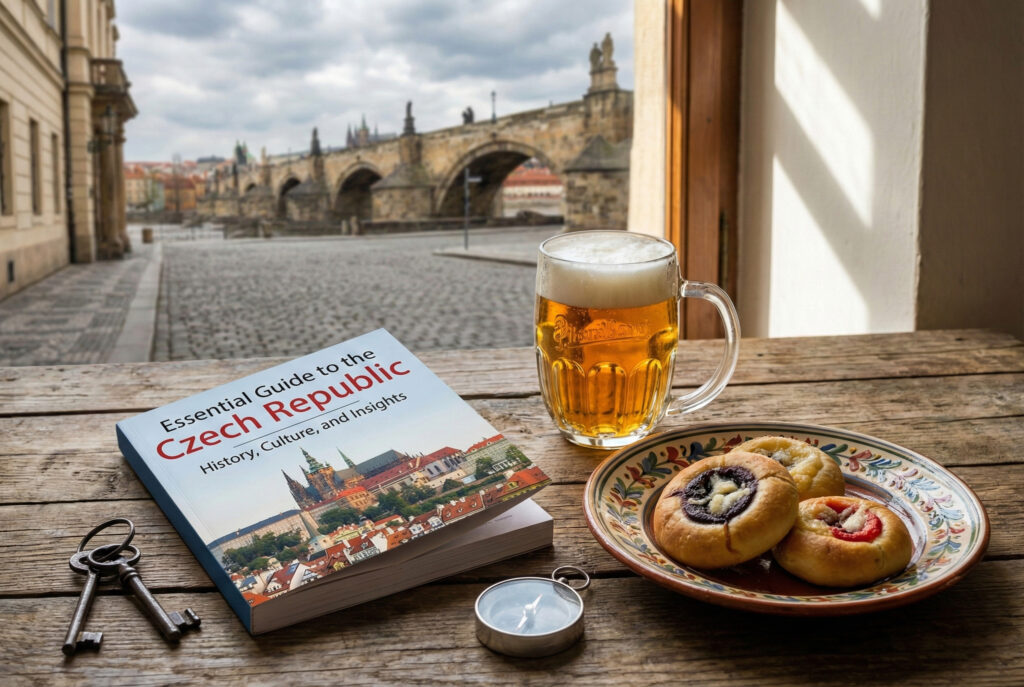
Czech cuisine is a vibrant tapestry woven from centuries of history, regional influences, and the agricultural bounty of Central Europe. At the heart of Czech culture, food is both a daily comfort and a marker of festive occasions. Classic dishes such as vepřo knedlo zelo (roast pork with dumplings and sauerkraut), hearty beef goulash, and svíčková na smetaně (marinated beef sirloin in a creamy vegetable sauce) are mainstays on Czech tables, often accompanied by pillowy bread or potato dumplings. Sweet treats are equally beloved, with koláč, yeast pastries filled with fruit, poppy seeds, or cheese, gracing family gatherings and celebrations, while the cinnamon-scented trdelník has become a favorite street food for locals and visitors alike.
Beyond its culinary delights, the Czech Republic is gaining international acclaim for its wine, particularly from the sun-drenched vineyards of Moravia. White varietals such as Riesling, Grüner Veltliner, and Gewürztraminer thrive in the region’s unique terroir, producing crisp, aromatic wines that are increasingly featured on global wine lists. Wine festivals and cellar tours are an integral part of Czech culture, offering a window into centuries-old traditions and the convivial spirit of Czech society.
Of course, no discussion of Czech cuisine would be complete without mentioning beer. The Czech Republic is renowned as the birthplace of the Pilsner style, and its breweries, most famously Pilsner Urquell and Budvar, are legendary. With the highest per-capita beer consumption in the world, beer is more than a beverage; it is a social institution, enjoyed in historic pubs and modern microbreweries alike. Whether savoring a glass of Moravian wine or raising a pint of golden lager, the flavors of the Czech Republic offer a delicious journey through the nation’s rich heritage.
10. Tourism and Travel: Exploring the Czech Republic
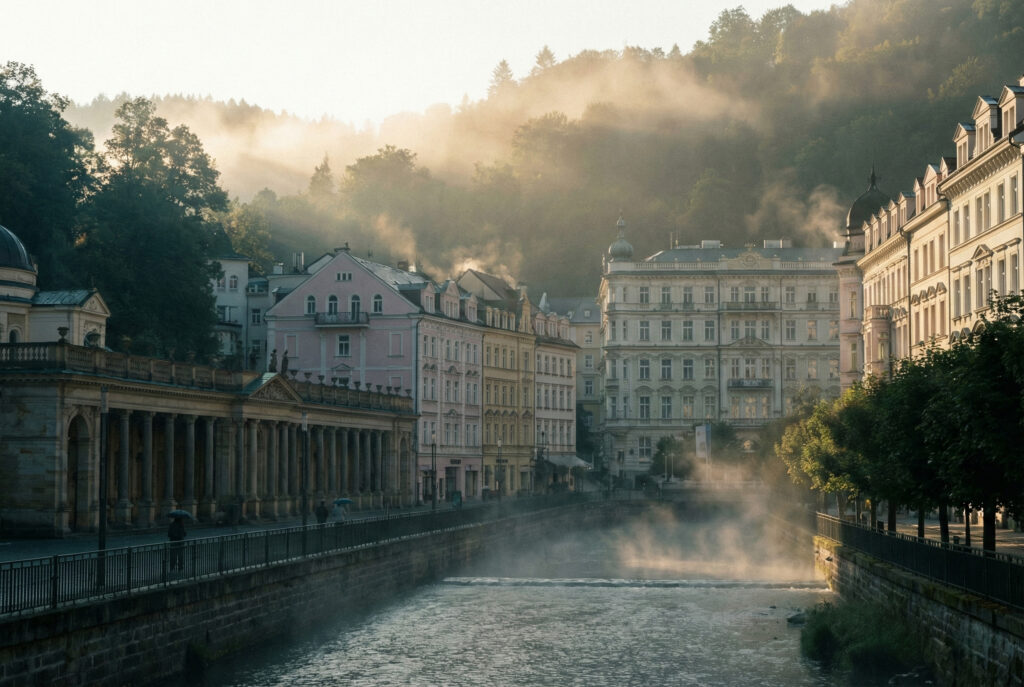
The Czech Republic stands as one of Central Europe’s most captivating destinations, drawing millions of visitors each year with its blend of medieval charm, architectural splendor, and natural beauty. At the heart of Czech tourism is Prague, a city where the past and present intertwine along the banks of the Vltava River. Visitors are enchanted by the city’s Gothic spires, the iconic Charles Bridge, and the sprawling Prague Castle complex, which houses treasures such as St. Vitus Cathedral and the historic halls of the former Czechoslovak Parliament. The city’s vibrant arts scene, lively cafés, and literary heritage, anchored by institutions like Charles University, make it a cultural hub for travelers from around the world.
Beyond Prague, the Czech Republic offers a wealth of experiences. The fairy-tale town of Český Krumlov, with its winding streets and Renaissance castle, is a UNESCO World Heritage site beloved by tourists. Spa towns like Karlovy Vary and Mariánské Lázně invite relaxation amid grand colonnades and mineral springs, while the dramatic landscapes of Bohemian Switzerland National Park and the Bohemian Forest provide opportunities for hiking, cycling, and outdoor adventure. The country’s well-developed tourism infrastructure ensures that visitors can easily explore both major cities and hidden gems, with English widely spoken in tourist areas alongside the official Czech language.
From world-class museums and galleries to historic synagogues and vibrant festivals, the Czech Republic offers a journey through centuries of European history and culture. Whether tracing the footsteps of Kafka in Prague or sampling Moravian wines in sunlit vineyards, travelers are sure to find the Czech experience both welcoming and unforgettable.
11. Sports and Recreation: National Pastimes and Achievements
Sports are woven into the fabric of Czech culture, serving as both a source of national pride and a beloved pastime for people of all ages. Football (soccer) reigns supreme, with the Czech national team boasting a storied history that includes memorable appearances in the World Cup and European Championship. Legendary players and passionate fans fill stadiums across the country, making match days a vibrant celebration of Czech identity.
Ice hockey is another cornerstone of Czech sporting life, with the national team consistently ranking among the world’s elite. The Czech Republic’s triumphs on the ice, including Olympic gold and multiple World Championship titles, are celebrated milestones, and the country continues to produce world-class players who excel in international leagues.
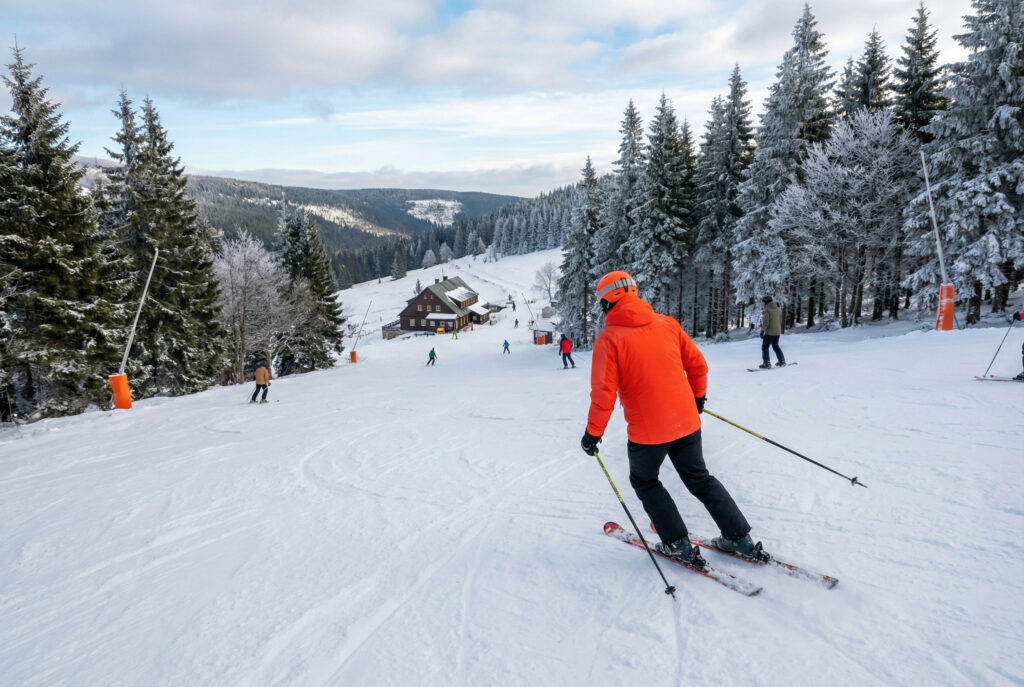
Beyond these marquee sports, the Czech Republic has a rich tradition of excellence in tennis, athletics, and cycling. Champions such as Martina Navratilova and Petra Kvitová have brought global recognition to Czech tennis, while the nation’s scenic countryside and extensive network of trails make it a haven for cyclists and hikers. In winter, the mountains of northern and southern Bohemia transform into popular destinations for skiing and snowboarding.
From local football pitches to international arenas, sports unite Czechs across generations and regions, reflecting the country’s enduring spirit of competition, camaraderie, and healthy living.


12. Environmental Protection: Stewardship and Sustainability
The Czech Republic has emerged as a leader in environmental stewardship within Central and Eastern Europe, balancing economic development with a commitment to sustainability. In recent years, the country has invested heavily in renewable energy sources, such as wind and solar, and has implemented policies to increase energy efficiency across industries and households. Sustainable transportation initiatives, including expanded cycling infrastructure and modernized public transit, are helping to reduce the nation’s carbon footprint.
Protecting the country’s rich natural heritage is a top priority. The Czech Republic is home to a network of national parks and protected areas, including the pristine Bohemian Forest, one of Europe’s largest and most ecologically significant woodlands. These efforts safeguard biodiversity and provide vital habitats for native flora and fauna.
On the international stage, the Czech Republic is an active participant in global environmental agreements, such as the Paris Agreement and the Convention on Biological Diversity. Government agencies like the Czech Environmental Ministry, along with organizations such as the Czech Union for Nature Conservation, play a crucial role in advancing conservation and sustainability initiatives. Through education, innovation, and community engagement, the Czech Republic continues to demonstrate its dedication to preserving the environment for future generations, ensuring that its landscapes remain as vibrant and resilient as its culture.
9. Conclusion
The story of the Czechs is one of remarkable endurance. From the medieval glory of Charles IV to the dark days of the Protectorate and the gray years of Normalization, the Czech nation has maintained a distinct cultural integrity. This identity was not preserved solely in the castles of Prague but also in the wooden dance halls of Texas and the Sokol gyms of Chicago.
Today, the Czech Republic stands as a bridge between East and West, a leader in technology, and a custodian of deep European traditions. The legacy of the diaspora, the sacrifices of the resistance, and the innovations of its scientists have woven a narrative that is both uniquely Czech and universally human. As the nation faces the challenges of the 21st century, demographic shifts, geopolitical instability, and technological disruption, it does so with the same pragmatic resilience that has defined its history for over a thousand years.
10. Data Appendices
Table 3: Czech Demographics and Aging Indicators (2024-2025)
| Indicator | Value | Significance |
| Total Population | ~10.9 Million | Slight increase due to migration, despite natural decline. |
| Population 65+ | 2.26 Million (20.7%) | Represents a significant burden on the pension system. |
| Index of Ageing | 133 | There are 133 seniors for every 100 children (0-14). |
| Life Expectancy (M/F) | 76.1 / 82.0 Years | Consistent rise puts pressure on long-term care. |
| Ukrainian Refugees | ~359,000 | Highest per capita intake in the EU; vital labor source. |
Table 4: Major Czech Contributions to Global Culture and Science
| Name | Field | Contribution |
| Gregor Mendel | Biology | Laws of Inheritance (Genetics). |
| Otto Wichterle | Chemistry | Invention of soft contact lenses. |
| Antonín Dvořák | Music | New World Symphony; Director of National Conservatory of Music of America. |
| Karel Čapek | Literature | Coined the word “Robot” in the play R.U.R. |
| Václav Havel | Politics/Lit | Concept of “Living in Truth”; leader of the Velvet Revolution. |
| Miloš Forman | Cinema | Director of One Flew Over the Cuckoo’s Nest and Amadeus. |
| Aleš Hrdlička | Anthropology | Founder of physical anthropology in the US; Smithsonian curator. |
| Jaroslav Seifert | Literature | Nobel Prize in Literature (1984). |
Report completed by the Office of Central European Cultural Analysis.